Navigation

Navigation
You are here: Home > People > Faculty > Joint Faculty > Jack Griffith, PhD
Document Actions

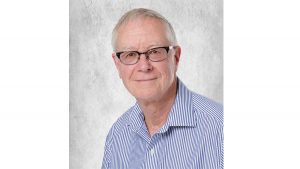
Jack Griffith, PhD

GRIFFITH - Jack

Kenan Distinguished Professor
PhD: California Inst. of Technology
Joint Appointee: Department of
Microbiology & Immnunology

119 Lineberger Cancer Ctr
Campus Box 7295
Chapel Hill, NC 27599

919.966.2151 (off)
919.966.3015 (fax)
jdg@med.unc.edu

Griffith graphic 


RESEARCH INTERESTS:

Biochemistry & Visualization of Protein-DNA Interactions

The research program of the Griffith laboratory centers around basic questions of DNA-protein interactions as they impinge on cancer, AIDS and several inherited genetic diseases. While our laboratory is best known for using high resolution electron microscopy to visualize proteins bound to DNA, many other technologies are utilized including tissue culture, production of recombinant proteins in insect cells, in vivo footprinting and ligation mediated PCR. In studies of p53, possibly the most central protein in the pathway that protects cells from malignant transformation, we are investigating the ability of p53 to recognize different lesions in DNA, in particular those generated by oxidative damage and errors in replication. Parallel studies are probing the ability of the mismatch repair proteins MSH2,3,6 to recognize a spectrum of lesions in DNA. These proteins, in particular MSH2, are known to be mutated in hereditary non-polyposis colon cancer. Similar DNA-protein studies involve the human proteins TRF1 and TRF2 which bind to the sequences at the ends of human chromosomes, termed telomeres. The  proteins regulate the activity of the telomerase enzyme that helps maintain telomere length. Cancer cells are known to be able to bypass these normal regulatory processes; hence understanding how TRF1 and 2 function is critical to understanding this pathway to transformation. Other studies focus on the fundamental arrangement of DNA at the replication fork in bacterial, viral (Herpes Simplex) and human cells. Our study of HIV centers on its chromatin structure as the HIV genome exists integrated in the human genome. Finally genomic instability is a hallmark of many cancers and several human genetic diseases including myotonic dystrophy. Our studies of the mechanism that give rise to these instabilities may pinpoint stages in the cell cycle where cells are most likely to have these instabilities arise. Our research program is greatly enriched by collaborations with Departmental colleagues in the Lineberger Cancer Center including Michael Topal and Aziz Sancar, and with investigators at other Universities including Thomas Cech, Paul Modrich, Richard Kolodner, Titia deLange and others.


RECENT PUBLICATIONS:

Etheridge KT, Compton SA, Barrientos KS, Ozgur S, Griffith JD, Counter CM. Tethering telomeric double- and single-stranded DNA binding proteins inhibits telomere elongation. J Biol Chem. 2008 Jan 3


Mitchell J, Griffith JD, Collins JH, Sederman AJ, Gladden LF, Johns ML. Validation of NMR relaxation exchange time measurements in porous media. J Chem Phys. 2007 Dec 21;127(23):234701


Mumtsidu E, Makhov AM, Konarev PV, Svergun DI, Griffith JD, Tucker PA. Structural features of the single-stranded DNA-binding protein of Epstein-Barr virus. J Struct Biol. 2008 Feb;161(2):172-87. Epub 2007


Griffith JD, Mycyk MB, Kyriacou DN. Metoclopramide versus hydromorphone for the emergency department treatment of migraine headache. J Pain. 2008 Jan;9(1):88-94. Epub 2007


Cesare AJ, Groff-Vindman C, Compton SA, McEachern MJ, Griffith JD. Telomere loops and homologous recombination-dependent telomeric circles in a Kluyveromyces lactis telomere mutant strain. Mol Cell Biol. 2008 Jan;28(1):20-9. Epub 2007


Kuo HK, Griffith JD, Kreuzer KN. 5-Azacytidine induced methyltransferase-DNA adducts block DNA replication in vivo. Cancer Res. 2007 Sep 1;67(17):8248-54


Yuan Y, Compton SA, Sobczak K, Stenberg MG, Thornton CA, Griffith JD, Swanson MS. Muscleblind-like 1 interacts with RNA hairpins in splicing target and pathogenic RNAs. Nucleic Acids Res. 2007;35(16):5474-86. Epub 2007  


Griffith JD, Bayly AE, Johns ML. Evolving micro-structures in drying detergent pastes quantified using NMR. J Colloid Interface Sci. 2007 Nov 1;315(1):223-9. Epub 2007


Koralek JD, Douglas JF, Plumb NC, Griffith JD, Cundiff ST, Kapteyn HC, Murnane MM, Dessau DS. Experimental setup for low-energy laser-based angle resolved photoemission spectroscopy. Rev Sci Instrum. 2007 May;78(5):053905


Davies CJ, Griffith JD, Sederman AJ, Gladden LF, Johns ML. Rapid surface-to-volume ratio and tortuosity measurement using Difftrain. J Magn Reson. 2007 Jul;187(1) :170-5. Epub 2007


Hart CL, Griffith JD, Randell JA. An analysis of U.S. parachuting fatalities: 2000-2004. Percept Mot Skills. 2006 Dec;103(3):896-900


Compton SA, Choi JH, Cesare AJ, Ozgür S, Griffith JD. Xrcc3 and Nbs1 are required for the production of extrachromosomal telomeric circles in human alternative lengthening of telomere cells. Cancer Res. 2007 Feb 15;67(4):1513-9


Nossal NG, Makhov AM, Chastain PD 2nd, Jones CE, Griffith JD. Architecture of the bacteriophage T4 replication complex revealed with nanoscale biopointers. J Biol Chem. 2007 Jan 12;282(2):1098-108. Epub 2006


Fouché N, Ozgür S, Roy D, Griffith JD. Replication fork regression in repetitive DNAs. Nucleic Acids Res. 2006;34(20):6044-50. Epub 2006


Fouché N, Cesare AJ, Willcox S, Ozgür S, Compton SA, Griffith JD. The basic domain of TRF2 directs binding to DNA junctions irrespective of the presence of TTAGGG repeats. J Biol Chem. 2006 Dec 8;281(49):37486-95. Epub 2006


Fouché N, Moon IK, Keppler BR, Griffith JD, Jarstfer MB. Electron microscopic visualization of telomerase from Euplotes aediculatus bound to a model telomere DNA. Biochemistry. 2006 Aug 8;45(31):9624-31


Liu B, Molina H, Kalume D, Pandey A, Griffith JD, Englund PT. Role of p38 in replication of Trypanosoma brucei kinetoplast DNA. Mol Cell Biol. 2006 Jul;26(14):5382-93

Calendar
« October 2008 »
Su Mo Tu We Th Fr Sa
1234
567 891011
121314 15161718
192021 22232425
262728 293031
 
Site-wide Actions
Personal tools