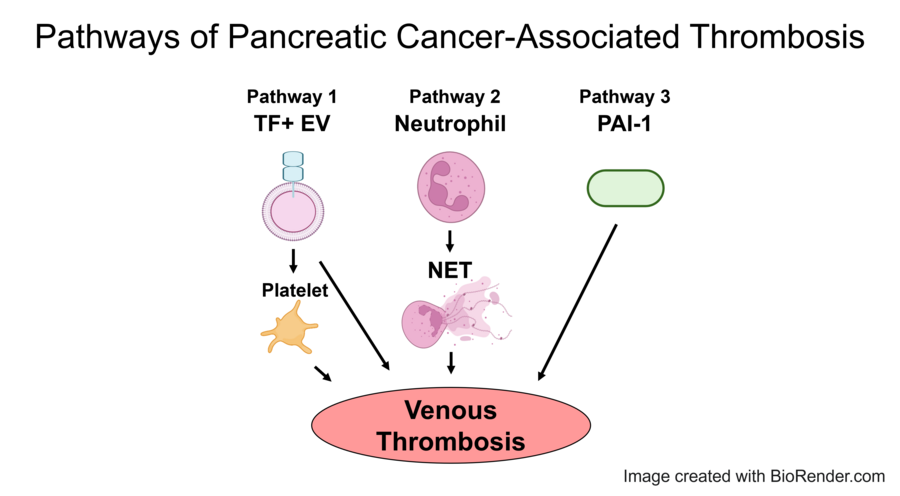
Pancreatic cancer-associated venous thrombosis
Cancer patients have a 4- to 9-fold increased risk of venous thrombosmbolism (VTE) compared with the general population. We are particularly interested in the mechanisms underlying pancreatic cancer-associated thrombosis (CAT), as pancreatic cancer has one of the highest incidences of VTE. Using mouse models of pancreatic CAT, we have identified three key pathways to venous thrombosis: (1) tissue factor-positive extracellular vesicles (TF+EVs), (2) neutrophils and neutrophil extracellular traps (NETs) and (3) plasminogen activator inhibitor-1 (PAI-1).