


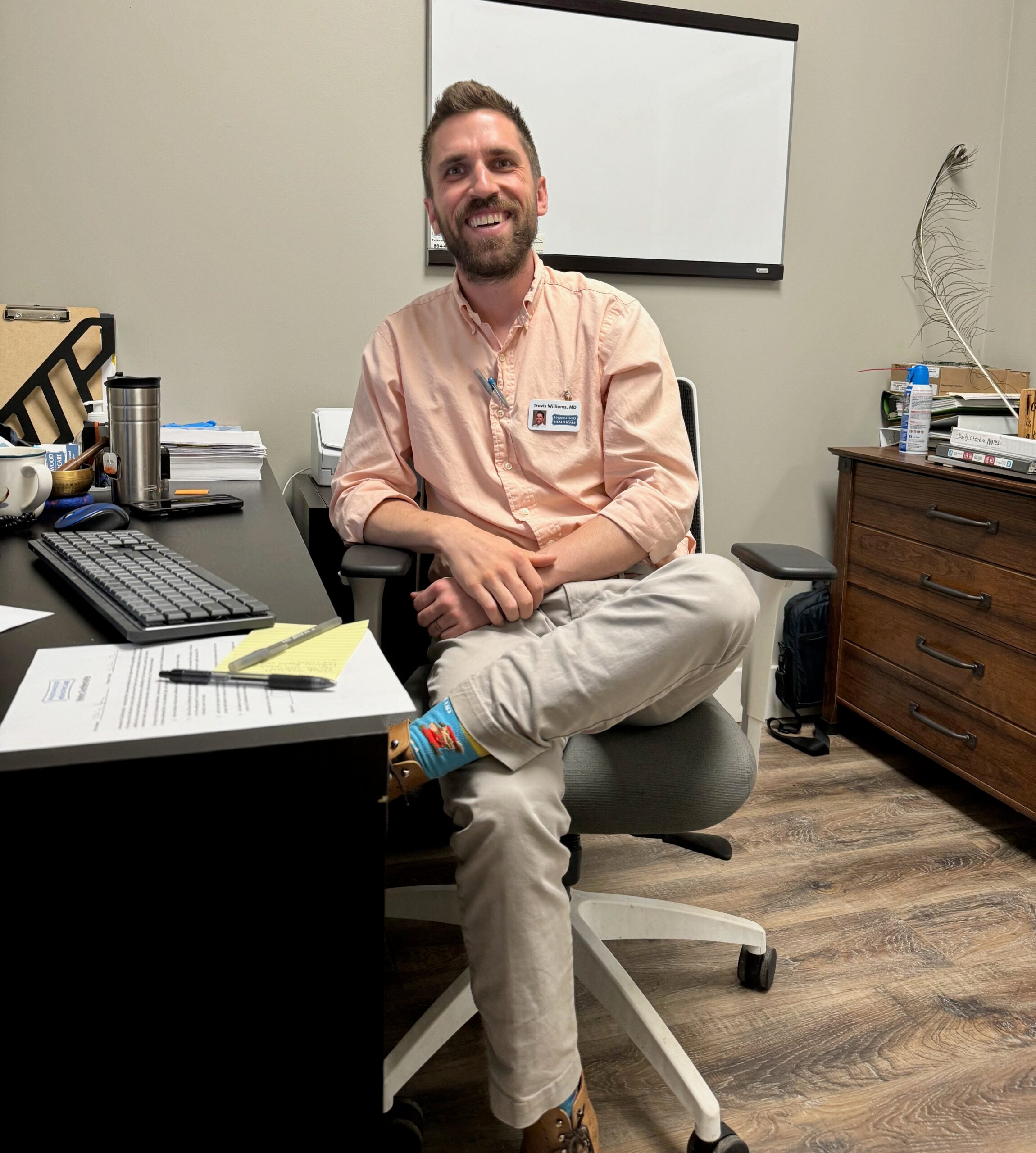
Early life experiences and unforgettable mentors shaped the path that Travis Williams, MD, took to becoming a family and addiction medicine physician in the North Carolina mountains.
Growing up in Chapel Hill, he helped to care for his often-hospitalized father, sparking a passion for medicine that led him to medical school at UNC. As a Kenan Primary Care Medical Scholar, Williams ’20 (MD) sought training opportunities in Western North Carolina (WNC), guided by a handful of dedicated clinicians providing essential care to mountain communities.
“I couldn’t have asked for better mentors,” Williams said. “All of them came from MAHEC (Mountain Area Health Education Center) or from UNC School of Medicine’s Kenan Rural Primary Care Medical Scholars program.”
During medical school, Williams got an early look at what primary care could be, as he shadowed physicians and learned from the clinicians who formed a key support network for patients and for each other.
One of his mentors advised Williams that the work would be either a job, or a lifestyle, and he needed to figure out which one. “I felt that I’d be happiest and most committed if it was a lifestyle,” said Williams.
Woven in the web of care
Just a year out of residency, Williams has become rooted in a life of rural medicine – raising his family near Hayesville, North Carolina, while caring for a diverse patient population.
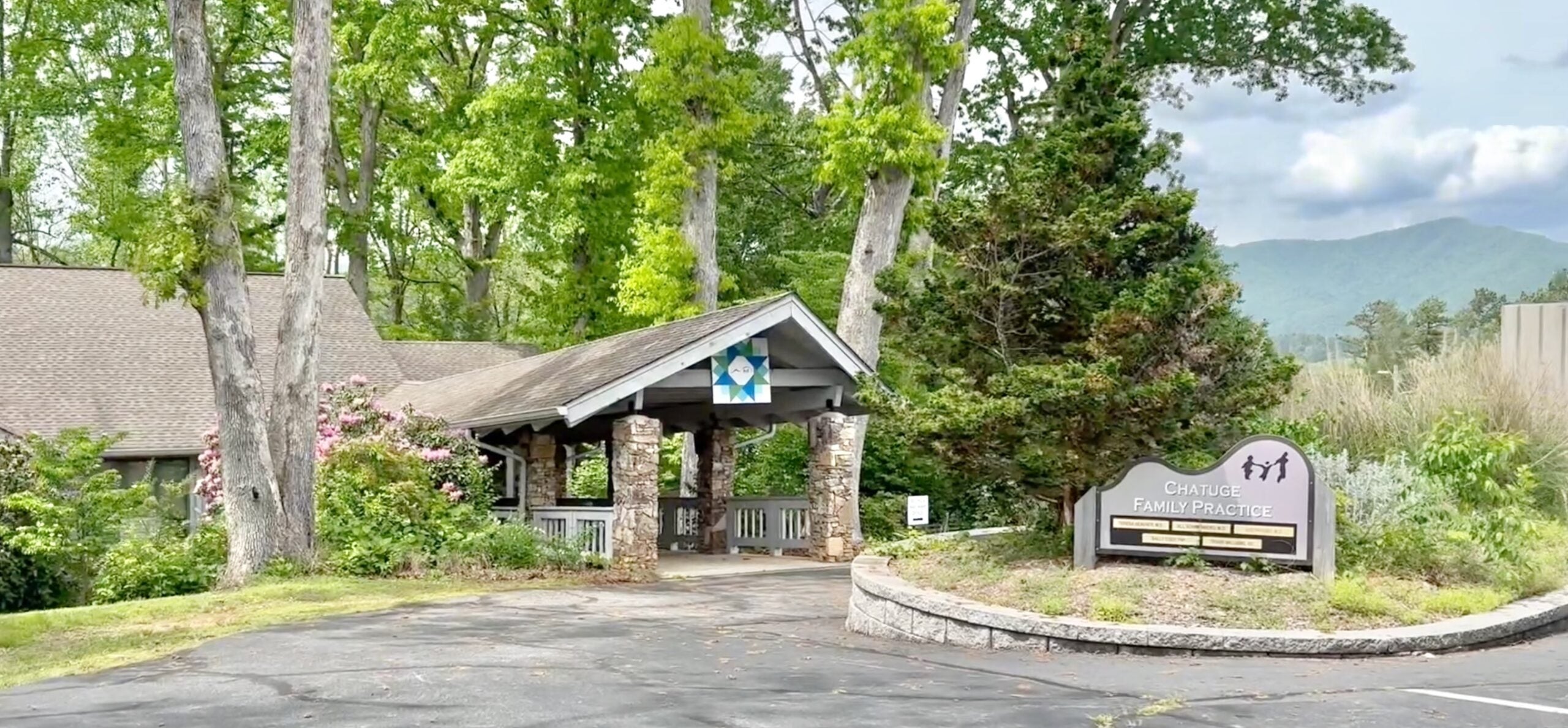
In addition to a clinical practice at Chatuge Family Practice in Hayesville, Williams helps with Hospice of North Carolina, works with an opioid treatment program in Macon County, provides medical direction for Clay County EMS, and performs stress tests at the regional hospital.
“It’s a privilege that you get to help so many different people, and you quickly get woven into that the web of care where help is needed in many different areas,” he said.
Williams and his wife Liz bought land just outside of Hayesville, where they live with their two-year-old daughter. Their land includes a lake and enough acreage to raise a few beef cattle. Setting down local roots is not a requirement to practice medicine in WNC, but it certainly doesn’t hurt his standing with patients. One of the first things people want to know is where he lives.
“We feel connected to the people and the land,” Williams said. “We’re investing in the future here.”
Carriedelle Fusco, MSN, FNP-BC, nurse practitioner and director of MAHEC Office-Based Opioid Treatment Services, has known Williams since he enrolled in her addiction elective at UNC Health Sciences as a medical student. “Travis’s enthusiasm for medicine and for working with rural populations, especially for people with substance use disorders, was crystal clear from the beginning,” Fusco said.
When it comes to healthcare, communities in WNC have a history of being left out and neglected. For Williams, family medicine – or as he prefers to call it, “community medicine” – begins with authentic knowledge to address the unique needs of a community. With his sights set on returning to WNC after residency, Williams signed with Chatuge Family Practice when he was still a fourth-year medical student.
During his residency at St. Mary’s Regional Hospital in Grand Junction, Colorado, he kept in contact with the clinic to be aware of any skills or areas he should prepare for. “I knew what I needed to train for in residency, so that when I got here, I could hit the ground running,” Williams said.
Medicine works differently in the mountains
Providing essential healthcare to mountain communities comes with challenges. Patients travel farther to reach fewer providers. Many lack insurance or a reliable means to travel, making routine care anything but routine. With providers and facilities stretched thin, clinic and hospital closures increase stress on the system.
Telemedicine holds promise for rural areas, but reliable mobile service and internet access is limited by mountain terrain. Things that people in suburban or urban areas take for granted, like 24-hour pharmacies, aren’t widely available. Getting results from imaging or labs also takes longer, adding days to the typical timeframe for turnaround.
Since delays can be critical when determining care, Williams sometimes has to make decisions quickly. For a young girl who came to the clinic with shortness of breath, test results to rule out pulmonary embolism (PE) would not be available for three days.
“I ended up having to scan her,” Williams said. “Luckily, she didn’t have PE, but these are decisions you have to make on the spot.”
Without a nearby hospital, mapping out care for sicker patients can involve more complexity. “If someone’s really sick, I have to consider if Murphy or Blairsville can handle what they might need, or if patients will just get sent to a bigger hospital,” he said. This often means multiple phone calls to explore options related to the next phase of care.
Addiction as a chronic condition
As a medical student and resident, addiction medicine was a through line in Williams’ training. The western part of the state has higher averages of opioid-related overdose deaths and higher rates of substance use than the state and nation.
During medical school, Williams trained with MAHEC’s addiction medicine team, and during residency, with addictionologist Ryan Jackman, MD. Near the end of his residency, he reached out to Matt Holmes, MD, a psychiatrist and addiction medicine specialist who has long served WNC communities. Post residency, Williams began helping part-time in Holmes’ clinic in Macon County, learning as much as he could about treating patients with methadone.
Williams’ goal was to begin offering addiction services at the clinic in Chatuge, and making basic primary care services available to those same individuals, through his practice. But first he had to garner support across the clinic for treating this patient population in a primary care setting.
Fusco described how, until recently, care for substance use issues would not have been offered in a family medicine practice.
“We were taught that those with addiction go somewhere else for care,” Fusco said. “We have siloed that work out for decades.”
At Chatuge, Williams has been able to establish care for individuals struggling with addiction. He currently sees 20 to 30 patients weekly who are in various stages of recovery and expects this number to grow. Williams hopes to see more “normalization” of care in this area so that individuals who struggle with addiction have fewer barriers to accessing basic health services.
Expanding the pipeline for care
As a former Kenan medical scholar and MAHEC trainee, Williams takes pride in WNC’s medical education pipeline – and he’s now serving as a mentor-preceptor, giving back to help grow the pipeline.
Future medical, nursing and health sciences students will be able to shadow Williams, learn about opportunities to connect with patients, and get a feel for how healthcare works in the mountains. They can even stay in the trailer Williams bought to serve as free housing for students who make the trek out to Clay County.
Williams doesn’t sugarcoat the challenges of rooting his family and career in a remote rural area. He admits that on some days, the lifestyle is more difficult than anticipated.
“My wife and I talk about it,” Williams said. “It’s hard to be a doctor in a rural place with a family – it’s more challenging than I thought it would be.”
Then he laughed and said that might be because he has a two-year-old.
It’s still early days for a young physician barely out of residency, but Williams has a clear commitment to this calling. With each patient he helps and each connection he makes, he is weaving a stronger web of care to support WNC communities for years to come.
Written by Claire Horne, UNC Health Foundation