


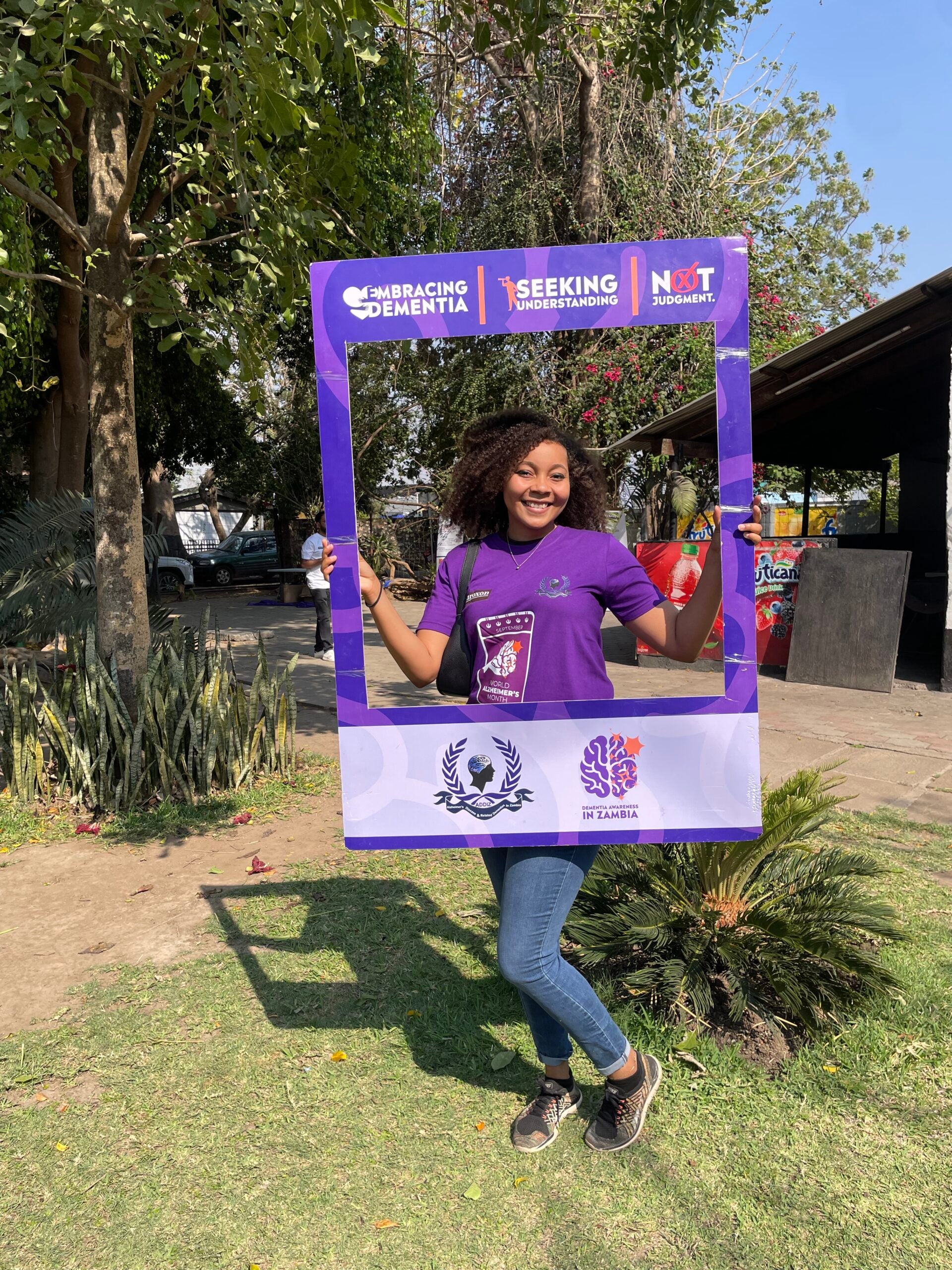
Nzia Hall has felt drawn to adult neurology for quite some time. As president of the Student Interest Group in Neurology, she helped revive the organization’s UNC chapter and now finds herself in the midst of applying to multiple neurology residency programs.
During her neurology acting internship, Hall met Dr. Deanna Saylor whose work in Zambia spans years and impacts countless lives. When Saylor invited Hall to join her on the next trip to the southern Africa country, Hall didn’t think twice.
“A lot of the global health electives that we have at UNC are tailored to OB/GYN or internal medicine,” said Hall, a fourth-year student from Durham, North Carolina. “But this was specifically neurology which is what I’m interested in. That made it even more of an exciting opportunity.”
With guidance from the Office of Global Health Education, Hall traveled to Zambia at the end of August for a four-week rotation.
“When I met with Nzia, I was immediately struck by her warmth, empathy with patients, and her earnestness to learn, all of which were immediately apparent in my first interactions with her,” Saylor said. “Throughout her time in Zambia, I was struck by her maturity, cultural humility, and openness to new people, new cultures, and new ways of approaching medicine.”
Under Saylor’s mentorship, Hall worked in multiple units at the University Teaching Hospital in Lusaka, gaining hands-on experience.
“I would present to Dr. Saylor,” Hall said. “She’s incredible at teaching and breaking things down so that she can teach to your level.”
On days when Saylor was at clinic, Hall worked alongside an intern. At first, the responsibility felt daunting. But soon, Hall realized the value of caring for patients more independently. She built trust with families and learned what it means to truly connect.
One moment stands out: A patient suffered a seizure while Saylor was away at the clinic. Hall’s quick and decisive actions under the supervision of the Zambian medical team helped the patient fully recover.
“That was really special to be able to safely care for a patient and a family I really cared about,” Hall said.
Her time in Zambia deepened Hall’s desire to pursue global health work in the future. She learned how to care for patients despite limited resources and practiced resource stewardship by being mindful of which tests and labs to order — a skill she’ll apply as a future physician.
“It was amazing to have an impact and do something that matters in a place where there was a lot of need,” Hall said. “You don’t need a lot of resources to give good, quality care. I learned that a lot of care is connecting to the patient and caring for the patient. If that is at the forefront of your approach, you can do so much and accomplish so much with patient care.”
The trip gave Hall renewed confidence as a provider and inspired personal growth. She said it’s part of the draw for students to participate in global health experiences. Seeing her patients’ resilience despite their circumstances left a lasting impression.
“I think that the most beautiful thing about being a physician is really being able to have an impact on others’ lives,” Hall said. “You really understand the breadth of that and the gravity of that when you do these global health experiences. It just feels amazing to really give care where there is need. You meet so many amazing people and make amazing memories.”
Nzia Hall’s trip was made possible through the Privette Endowment fund and the Perkins-Burke International Fellowship program fund. To help support future SOM student global health programs like Hall’s, donate at: www.unchf.org/globalmeded.