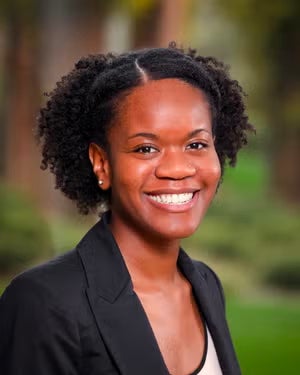
Tierra Bobo, PhD
Research Assistant Professor, Pediatrics - Genetics & Metabolism
About
Tierra is a research assistant professor with 16 years of experience in biomedical research. Tierra graduated from The Ohio State University in 2016 with a PhD in genetics. Tierra currently specializes in using AAV gene therapy approaches and she is deeply passionate about the transformative potential of biomedical research, particularly in the field of MPS. Tierra’s work is inspired by the curiosity to truly understand the ins and outs of neurogenetic diseases and the ability to develop a therapy that can impact numerous patients with rare congenital diseases.
In her free time, Tierra enjoys spending time with her son and husband and trying new things around the research triangle. Tierra is always eager to share the importance of working in an MPS research lab and to inspire others to join the exciting field at UNC. By sharing her knowledge and experiences, Tierra hopes to ignite a similar passion in others and encourage them to make a difference in the lives of MPS patients.
Research
My research is dedicated to understanding the molecular mechanisms underlying rare congenital neurogenetic disorders and translating these insights into innovative gene therapies. I primarily focus on lysosomal storage disorders (LSDs), including Mucopolysaccharidosis (MPS), and other severe neurodevelopmental conditions for which there are currently no effective treatments.
Although rare, these diseases profoundly impact patients and their families and offer valuable insights into fundamental biological processes. By advancing gene therapy technologies, my research addresses urgent unmet clinical needs while contributing broadly to our understanding of human genetics, neurobiology, and translational medicine.
By integrating molecular biology, AAV vector engineering, extracellular vesicle (EV) profiling, and in vivo disease modeling, our research aims to improve the safety, precision, and durability of gene therapies; develop scalable treatments for underserved populations; and advance our understanding of neurogenetic disease pathogenesis.
Some current projects in the lab focus on the following areas.
AAV-Mediated EV Cargo for Cross-Correction in Non-Secreted Protein Disorders
One of the major challenges in gene therapy for neurogenetic diseases is achieving broad biodistribution and transgene expression, especially when the therapeutic protein is not naturally secreted. To address this, my lab is developing a novel platform that uses extracellular vesicles (EVs) to enhance the delivery of mRNA cargo via recombinant AAV (rAAV) vectors.
We have demonstrated that incorporating EV-mRNA packaging signals into rAAV vectors enhances mRNA loading into EVs, thereby enabling the cross-correction of non-transduced cells through a bystander effect. We are currently using a preclinical MPS IIIC model to test this strategy and extending this approach to other neurogenetic diseases involving non-secreted proteins, such as Fragile X Syndrome, Niemann-Pick Disease Type C, and Rett Syndrome.
Enhancing Transgene Expression via 3’UTR Engineering
Sustained and efficient expression of therapeutic genes is crucial for the success of gene therapy. We are investigating the role of cis-regulatory elements within the 3’ untranslated region (3’UTR) of transgenes to improve mRNA stability and translational efficiency.
By systematically identifying and optimizing these regulatory sequences, we aim to increase transgene expression, reduce required vector doses, and minimize immunogenicity, enhancing the overall safety and efficacy of AAV-based therapies, particularly in the CNS.
EV-Based Biomarkers in Neuronopathic MPS Models
In parallel with therapy development, we are exploring extracellular vesicles as a source of non-invasive biomarkers for disease progression and treatment response in neuropathic MPS. Using MPS mouse models, we analyze EV cargo from cerebrospinal fluid and blood to identify molecular signatures correlated with disease severity and therapeutic outcomes.
This work addresses a critical gap in the field- the lack of robust biomarkers for rare neurodegenerative diseases. Our findings may facilitate clinical monitoring and help accelerate the translation of emerging therapies.
Overcoming Pre-Existing Immunity to AAV Vectors
A major challenge in AAV gene therapy is the presence of pre-existing anti-AAV antibodies, which impair vector transduction and restrict both patient eligibility and the potential for repeat dosing. To address this, we are collaborating with NeuroGT Inc. to develop Ab-cleaver (AbC), an enhanced IgG-degrading enzyme engineered with improved thermal stability and antibody-cleaving efficiency. Currently, we are evaluating AbC’s efficacy in preclinical in vivo studies using large animal models immunized against AAV9. Early results demonstrate that AbC enables efficient AAV9-mediated gene transfer, even in animals with moderate pre-existing immunity.
-
Undergraduate
Ohio State University
-
Doctor of Philosophy
Human Molecular Genetics
Ohio State University -
Post-Doctorate
Haiyan Fu Lab
UNC Gene Therapy Center
University of North Carolina at Chapel Hill