Meet the CIDD T32 Postdoctoral Research Training Program Directors and Fellows
-

Co-Director, T32 Postdoctoral Research Training Program
Dr. Mark Shen is a developmental neuroscientist and tenured Associate Professor of Psychiatry, Neuroscience Center, and the CIDD. He is also the founding Director of the CIDD Clinical Trials Program. Dr. Shen earned his PhD from the University of California-Davis MIND Institute with David Amaral and completed the CIDD T32 postdoctoral fellowship with Joe Piven. Dr. Shen has pioneered research on the role of aberrant cerebrospinal fluid physiology in the pathogenesis of autism and other neurodevelopmental disorders. His research identifying early brain markers of autism, fragile X syndrome, Down syndrome, and Angelman syndrome has resulted in over 50 peer-reviewed publications. Dr. Shen reverse-translates his research in children to preclinical models, and forward-translates this research to inform clinical trials. As a former T32 fellow himself and then T32 faculty mentor, Dr. Shen began his current role as co-director of our T32 training program in 2023.

Co-Director, T32 Postdoctoral Research Training Program
Dr. Ben Philpot was the Associate Director of the CIDD T32 postdoctoral training program from 2009-2023, and he has been the Director of the program since 2023. Dr. Philpot is a Kenan Distinguished Professor in the Department of Cell Biology & Physiology. He earned his Ph.D. at the University of Virginia and performed a postdoctoral fellowship in the laboratory of Dr. Mark Bear at M.I.T. and Brown University. He is the Associate Director of the UNC Neuroscience Center and a member of the Carolina Institute for Developmental Disabilities. Dr. Philpot seeks to understand the pathophysiology underlying monogenic neurodevelopmental disorders, and he is developing small molecule and gene therapies to treat these disorders. His research focuses on early-stage development of treatments for Pitt-Hopkins, Dup15q, and Angelman syndromes. Dr. Philpot has >100 peer-reviewed scientific publications and has won multiple awards for his work in neurodevelopmental disorders.
Current T32 Postdoctoral Fellows
Dr. Mark Shen and Dr. Ben Philpot will work with a talented group of six post-doctoral research fellows in our NICHD-funded training program on neurodevelopmental disorders research: first year postdocs Emma Jagasia, Kathryn McNaughton, and Alicia Ravens; and second-year postdocs Scott Albert, Samuel Barth, and Marissa DiPiero. We are thrilled to have these talented postdoctoral fellows in our interdisciplinary program. Learn more about our current cohort below.
-
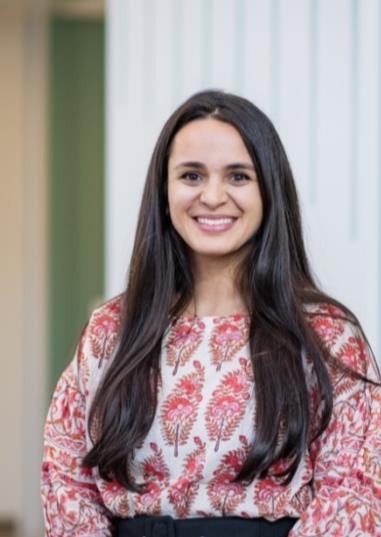 Emma Jagasia
Dr. Emma Jagasia (1st year T32 awardee) received her research PhD and Doctor of Nursing Practice (DNP) from the Johns Hopkins University School of Nursing. Her research focuses on the neurodevelopmental impact of early violence exposure during childhood and adolescence. Dr. Jagasia works under the mentorship of Dr. Cathi Propper to investigate how early environmental stressors influence brain development and contribute to neurodevelopmental disorders, with a focus on the gut–brain axis as a potential mediator of these effects. Her work leverages longitudinal neuroimaging and behavioral data to inform developmentally sensitive interventions that bridge basic science and clinical practice.
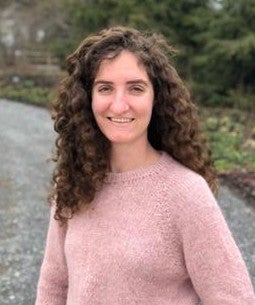 Kathryn McNaughton
Dr. Kathryn McNaughton (1st year T32 awardee) received her PhD in Neuroscience and Cognitive Science from the University of Maryland under the mentorship of Dr. Elizabeth Redcay. Her research investigates neural and cognitive factors involved in peer interactions between autistic and non-autistic youth. As a UNC CIDD T32 fellow, Dr. McNaughton will work with Drs. Clare Harrop and Dan Bauer to investigate longitudinal trajectories in social processing, peer interactions, and mental health outcomes for autistic youth.
 Alicia Ravens
Dr. Alicia Ravens (1st year T32 awardee) earned her PhD in Neuroscience from the University of Utah under the mentorship of Dr. Jason Shepherd, where she investigated non-cell-autonomous mechanisms of synaptic plasticity. Her work revealed how the activity-dependent release of the neuronal protein Arc coordinates network-level processes critical for memory consolidation. For her postdoctoral training, Dr. Ravens joined the lab of Dr. Graham Diering to study how sleep is encoded and discharged at excitatory synapses through plasticity mechanisms. As a fellow in the UNC CIDD T32 program, she is investigating how genetic regulation of sleep affects synaptic development and contributes to dysfunction in neurodevelopmental disorders. Her research ultimately aims to identify sleep-based therapeutic strategies to restore synaptic and behavioral function.
 Scott Albert
Dr. Scott Albert (2nd year T32 awardee) received his PhD in Biomedical Engineering from Johns Hopkins University working with Dr. Reza Shadmehr. His research examines resilience in motor circuits across humans and mice. As a UNC CIDD T32 Fellow, Dr. Albert works with Dr. Adam Hantman, in examining whole-brain maps of motor activity in mouse models of Angelman Syndrome and Dup15q Syndrome. He will use fMRI and electrophysiology to identify how UBE3A expression regulates the adaptability and robustness of motor control circuits.
 Samuel Barth
Dr. Samuel Barth (2nd year T32 awardee) received his PhD in Neuroscience from Wake Forest University working with Dr. Kimberly Raab-Graham. His research examines how mTOR dysregulation affects GABAergic synaptic formation and elimination in a neurodevelopmental disorder called Tuberous Sclerosis Complex (TSC). As a UNC CIDD T32 Fellow, Dr. Barth examines the molecular contributions to Dup15q and Angelman syndromes while working with Dr. Ben Philpot. His research will disambiguate how differential expression of Ube3A contributes to Dup15q and Angelman syndrome pathology.
 Marissa DiPiero
Dr. Marissa DiPiero (2nd year T32 awardee) received her PhD in Neuroscience from the University of Wisconsin-Madison under the mentorship of Dr. Doug Dean. Her research focuses on the development and utilization of diffusion MRI methodologies to study brain microstructure across the lifespan and uncover differences in brain-behavior relationships associated with autism. As a UNC CIDD T32 fellow, Dr. DiPiero works with Dr. John Gilmore to investigate individual differences in the developmental trajectories of brain-behavior relationships in children at an increased risk for neurodevelopmental conditions, including autism and schizophrenia.