Findings
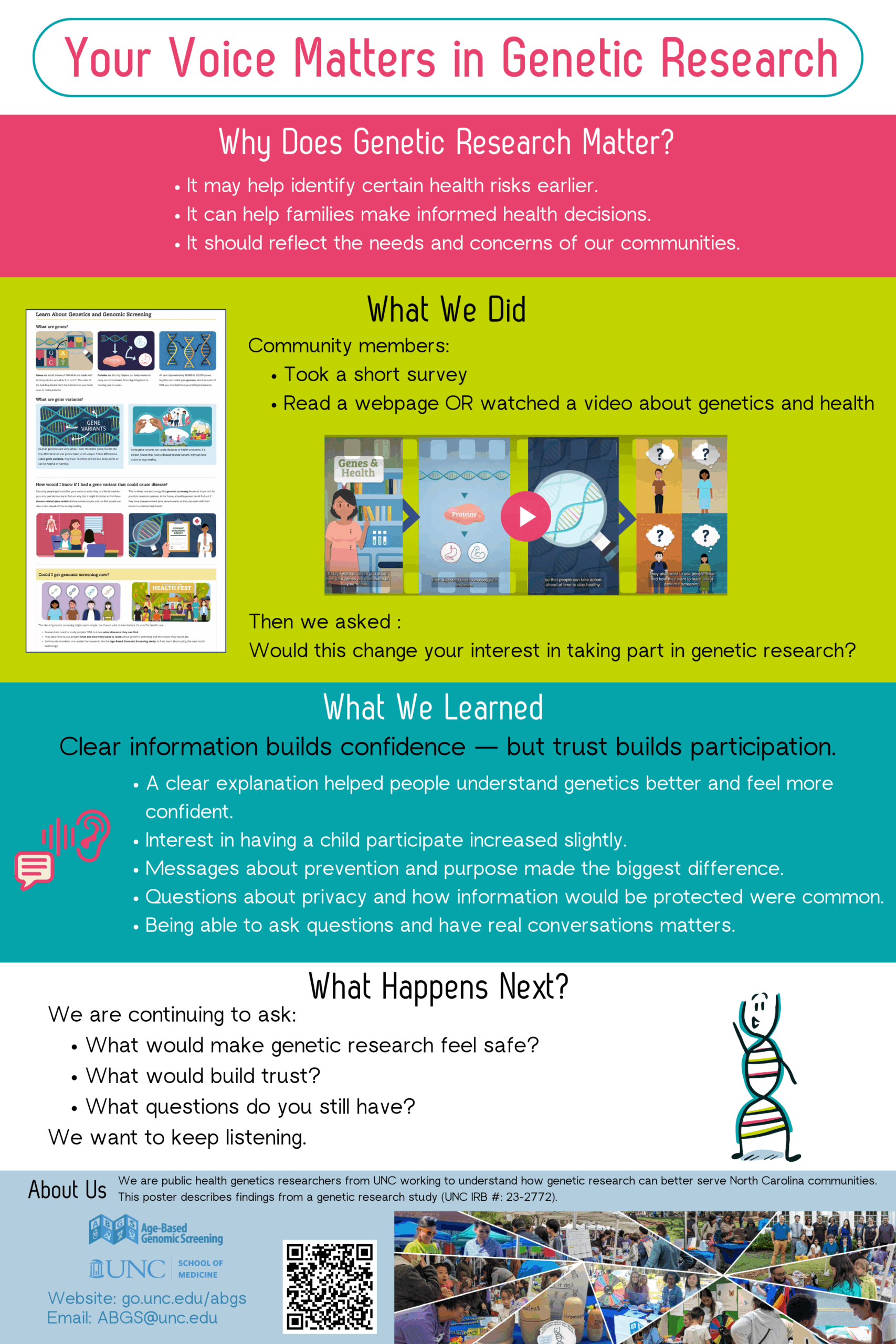
Poster (click on poster image for larger version)
Publications
| 2026 | North Carolina Primary Care Provider Perspectives on Expanded Genomic Screening in Children |
| Summary: This study examined North Carolina health care providers’ thoughts about using genomic screening in childhood to identify treatable conditions early. Most providers supported the idea but felt unsure about interpreting and explaining results, and they worried about time, costs, and resources. Successful implementation will require better support, training, and equitable access for families. | |
| 2025 | Age Based Genomic Screening: Pediatric Providers’ Perspectives on Implementation |
| Summary: This study explored pediatric health care providers’ views on adding age-based genomic screening to routine well-child care visits. Providers felt it could work but noted challenges limited time during visits, unfamiliarity with discussing genetics topics, and concerns about access. Families may also worry about results and trusting the health care system. | |
| 2024 | Community Collaboration in Public Health Genetic Literacy: Co-Designing Educational Resources for Equitable Genomics Research and Practice |
| Summary: Researchers and community members worked together to create easy-to-read genetics education materials that reflect community needs and concerns. This partnership helped make information more clear, relevant, and trustworthy. This approach can improve understanding, build trust, and support fair access to genomic information. | |
| 2023 | Age-Based Genomic Screening during Childhood: Ethical and Practical Considerations in Public Health Genomics Implementation |
| Summary: This article describes challenges to applying genomic sequencing in healthy populations. Age-based screening is an alternative to whole-genome sequencing at birth and integrates actionable information into routine well-child care. | |
| 2022 | Parental Guidance Suggested: Engaging Parents as Partners in Research Studies of Genomic Screening for a Pediatric Population |
|
Summary: This article describes how parents can partnered with researchers to improve genomic screening in children. It highlights a Community Research Board that incorporates parental opinions to address ethical, social, and trust-related challenges. This approach works towards making genomic screening programs equitable, accessible, and trustworthy. |