
Category: Community, Health, Education, & Wellness

Pathways to Auditory Processing Differences in ASDPathways to Auditory Processing Differences in ASD
Funded through an Autism Speaks Grant, we are using EEG to understand the emergence of auditory processing deficits/differences in infants at risk for ASD. Contact Person Clare Harrop, principal investigator, clare_harrop@med.unc.edu Investigators and Key Personnel Clare Harrop Linda Watson Aysenil Belger Alana Campbell Primary Funding Source Autism Speaks
HomeLink – An Innovative Team Targeting Homelessness for Adults with Serious Mental Illness in Orange and Chatham Counties
This project combines supportive housing services and comprehensive wrap-around evidence-based supports to address the housing, health, and behavioral health needs of homeless persons with serious mental illness (SMI) in Orange and Chatham Counties, North Carolina. Our project, called HomeLink, connects participants to (1) stable and affordable housing; (2) enhanced psychosocial … Read more

Role of Rehabilitation in Concussion Management: A Randomized, Controlled Trial
We propose a randomized clinical trial to yield preliminary data on the added benefits of active rehabilitation during recovery after sport-related concussion in professional and amateur athletes. This trial marks an international collaborative effort involving the NFL, CFL, New Zealand Rugby, American Hockey League, and academic researchers in the United States. Specific Aims: T … Read more

Advancing Social-communication and Play (ASAP): An Intervention Program for Preschoolers with Autism
The primary aim of the Advancing Social-communication And Play (ASAP) intervention is to promote the social-communication and play skills of preschoolers with autism spectrum disorder (ASD) being served in public preschool programs. The ASAP grant project was a four-year, multisite study funded by the Institute of Education Sciences (IES), U.S. Department of Education was to exam … Read more

Portable Warrior Test Of Tactical Agility – POWAR-TOTAL
This pilot project funded by NC State-UNC Rehabilitation Engineering Center is focused on testing the use of smartphone technology in place of laboratory grade accelerometry to measure movement in a military tactical maneuver. The POWAR-TOTAL assessment is derived from two high level mobility tasks that were part of a return-to-duty test battery, the Assessment of Military Multit … Read more

Evaluation of the Defense and Veterans Brain Injury Center’s Progressive Return To Activity Clinical Recommendation for Active Duty Service Members with Concussion
In 2014, the Defense and Veterans Brain Injury Center (DVBIC) released newly-developed clinical recommendations (CRs) detailing the step-wise return to unrestricted activity following mild traumatic brain injury (mTBI)/concussion. The CRs and their tools provide the medical community clear guidance for safely returning patients to pre-injury activities and more generally, for fos … Read more
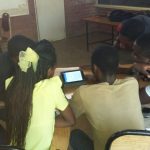
Effect of Mobile Electronic Device use on Learning Outcomes and Satisfaction in the Malawian Radiologic Science Classroom
Malawi is a developing country located in southeastern Africa. Health Sciences education is available in Lilongwe, Blantyre and Zomba. The specific area of interest for this proposal is for the Diploma Radiography Programme located on the Lilongwe campus of the Malawi College of Health Sciences (MCHS). The purpose of this study is to investigate and validate student acceptance of … Read more

Promoting ASAP Collaboration through Technology (PACT): An Intervention Modification to Enhance Home-School Collaboration
The overall purpose of this Goal 2: Development and Innovation project is to enhance the existing Advancing Social-communication and Play (ASAP) intervention through development of a technologically supported system of home-school collaboration. ASAP was originally designed as a classroom-based intervention, in which the educational teams serving preschool-aged children with auti … Read more

SBIR: Targeted tCDS Aphasia Trial (Phase2)
The potential benefits of conventional transcranial Direct Current Stimulation (tDCS) using sponge-pad electrodes have been demonstrated in small pilot studies for motor rehabilitation after stroke and the treatment of aphasia after stroke. Unfortunately, conventional sponge-electrode montages lead to diffuse stimulation throughout cortex with less-than-optimal intensities at the … Read more
Testing Novel Measures of Community Function and Participation in Adults with Cerebral Palsy
Cerebral palsy (CP) is the most common cause of physical disability in children, impacting approximately 1 in 500 young Australians and 2-3 in 1,000 young Americans. Most of these children live to within five years of a typical lifespan, depending on the severity of the disorder. However, after age 21 when they exit the school systems, the availability and accessibility of formal … Read more