The SRSD (Self-Regulated Strategy Development) Replication Project is a multi-year research initiative focused on improving writing instruction for 6th-grade English Language Arts (ELA) classrooms. The study, led by Dr. Stephen Hooper and Dr. Lara Costa, provides teachers with professional development on how to implement SRSD, a structured teaching model that helps students learn to plan, organize, and monitor their writing. Through tools like graphic organizers, self-talk strategies, and progress tracking, SRSD encourages students to become more independent and confident writers. The team works directly with teachers to integrate SRSD into their existing curriculum via a structured professional development model, then evaluates its integration into the regular classroom setting using a combination of essay scoring, classroom observations, and fidelity measures. Through these measures, they aim to evaluate the impact of SRSD on student writing and teacher practice by tracking student writing progress and observing classroom instruction, particularly during targeted parts of the school year.
The current study evaluates SRSD under routine classroom conditions, aiming to:
- Provide large-scale evidence of SRSD’s effectiveness with middle school students.
- Identify the conditions under which SRSD is most successful.
- Promote sustainability of the practice in diverse educational settings.
Since the start of the study, the Writing Skills Development Program (WSDP) has partnered with four school districts in the southeastern United States, providing teachers with targeted professional development and support to integrate SRSD into their existing curriculum with minimal disruption. Throughout the study, students participate in three benchmark writing assessments throughout the year, and classrooms are observed to assess instructional fidelity and quality of implementation. Reflecting on their experience following an in-class observation, one 6th-grade ELA teacher from last year’s cohort shared, “Thank you for joining us today! I am excited to see where this leads our kids. They did a great job today, and I am hopeful it will all spill over into their writing. I can’t wait!”—a sentiment that captures the enthusiasm and optimism surrounding the initiative.
This year, the study will expand to two new counties, and return to a third, engaging over 30 schools in the SRSD initiative. Recruited schools are separated into control and treatment groups, with all control classrooms participating in the same writing assessments and fidelity checks as the treatment classrooms. Following their participation, all control schools have the opportunity to receive SRSD training as well.
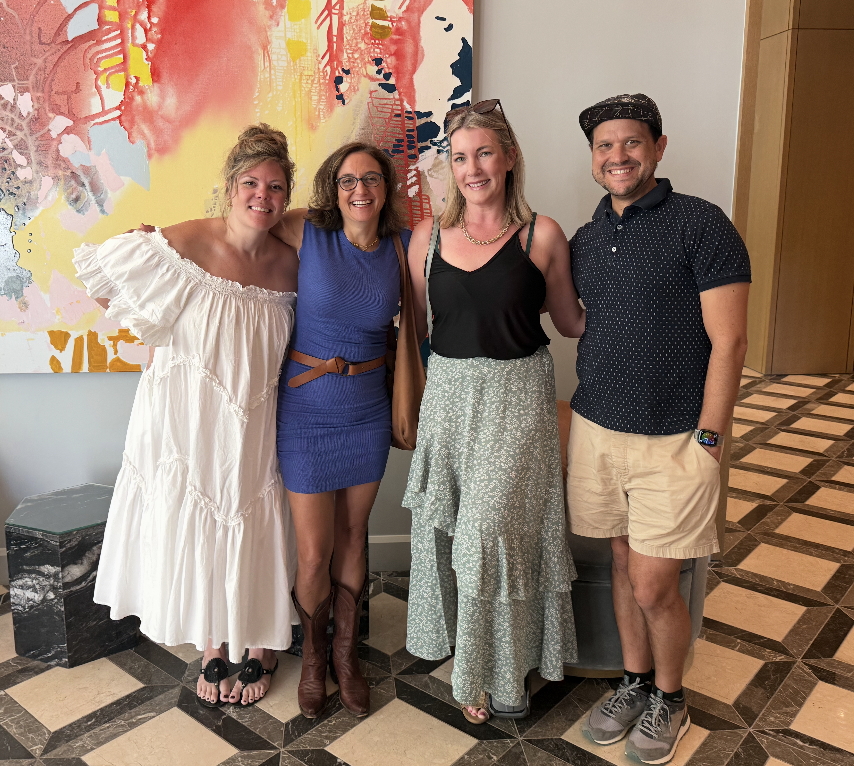
Professional development is delivered through multi-day workshops led by Dr. Katie Miller and Kimberlee Miller, our collaborative partners from Florida Atlantic University (FAU). Literacy coaches also receive half-day training sessions to support teachers throughout the year and, hopefully, to provide sustainability once the project is completed. Working with the FAU consultants, the program’s Curriculum Specialist Coordinator, Alexandra Barker, ensures alignment with district standards and instructional goals, supporting each school and county at a personalized level.
As the study enters its next phase, the team remains focused on expanding participation, refining implementation supports, and to begin analyzing outcomes. The goal is to evaluate and provide evidence for the effectiveness of the SRSD model for writing instruction that can be adopted widely across districts and states.
For more information about this study and SRSD, educators and administrators are encouraged to contact the WSDP research team and read through their blog.