QI Methodologies
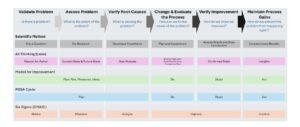
Quality Improvement (QI) Methodologies in Healthcare are systematic, data-driven efforts to make healthcare safer, more effective, patient-centered, timely, efficient, and equitable. All QI methodologies stem from the Scientific Method and include the following:
- Lean is a set of operating philosophies and methods that help create maximum value for patients by reducing waste. It emphasizes consideration of customer needs, employee involvement and continuous improvement. It is especially useful when organizing workspaces and optimizing supply flow.
- The Model for Improvement is a simple, yet powerful approach for accelerating learning by introducing iterative, small scale experiments into an existing process. It involves asking three questions (What are we trying to improve? How do we know a change is an improvement? What changes can we make that will result in improvement?), followed by a cycle. The cycle is where change ideas are tested is known as the Plan-Do-Study-Act cycle. This approach can be especially valuable when looking to optimize clinic workflows.
- Six Sigma is designed to eliminate defects and reduce variation by using statistical tools to understand and improve processes. This methodology works well for processes with large amounts of data so we can better identify which inputs create the most significant effects on our results. Implementation of pre-procedure time outs and checklists are helpful tools that have been substantiated with Six Sigma analysis
Here is a table summarizing the differences in QI methodologies.

To learn more about the QI training opportunities at UNC please visit our Quality Improvements at UNC page.