Researchers are developing programmable immune strategies that allow T cells to resist exhaustion and sustain anti‑tumor responses.
Tumors survive in part by sending “don’t attack me” signals to T cells. Many current immunotherapies rely on antibody drugs to block these signals, but these treatments don’t work for all patients and can lose effectiveness over time. Kay Chung, an assistant professor in the Department of Cell Biology and Physiology and a member of the UNC Lineberger Comprehensive Cancer Center at the University of North Carolina at Chapel Hill, is working to change that.
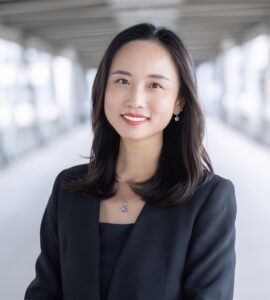
“We’re moving beyond simply blocking inhibitory signals,” said Chung. “Our goal is to rewire how T cells interpret those signals—so what normally suppresses them instead activates them.”
She partnered with Xin Zhou at the Dana-Farber Cancer Institute, her former graduate school colleague with a shared vision of integrating synthetic biology and immunology to create next-generation cell therapies. The two recently received a Chan Zuckerberg Biohub grant to rewire T cell signals, enabling T cells to reinterpret tumor-derived cues and sustain anti-tumor activity. This approach represents a paradigm shift in the field from blocking immune signals with antibodies or drugs to programming how immune cells interpret them.
Chung’s recent work defined the regulatory circuitry that governs T cell state transitions, identifying key transcription factors that drive activation and exhaustion (1). Building on this foundation, she is developing next-generation synthetic platforms to reprogram how T cells interpret signals, integrating transcription factor engineering with programmable intracellular logic circuits.
Chung and Zhou’s newly funded project through the Chan Zuckerberg Biohub combines Chung’s T cell programming framework with Zhou’s protein engineering to build programmable intracellular signaling systems. Using synthetic protein binders developed by Zhou to precisely control intracellular signaling (2), the team plans to engineer T cells that can convert suppressive signals from the tumor microenvironment into activation cues, effectively flipping the signal.
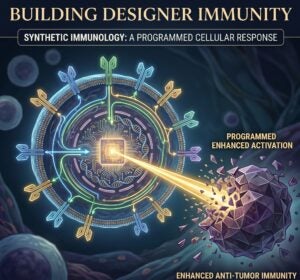
“When a tumor tries to turn T cells off, we want that signal to do the opposite—to wake them up,” Chung said.
Chung and Zhou are also developing a complementary strategy: a drug-controllable system that temporarily disables inhibitory receptors on T cells. Some inhibitory receptors are essential for T cell activity and survival, so completely knocking out those receptors could have negative consequences. “Think of it as a molecular remote control,” Chung said. “We can tune T cell responses dynamically rather than locking them into a single state.”
Together, these approaches are designed to create a new class of immunotherapies with greater precision, adaptability, and durability than current treatments. If successful, this work will be a step toward a future in which immune responses can be precisely designed to meet the demands of complex diseases like cancer.
References
- Chung, H.K., Liu, C., Battu, A., et al. Atlas-guided discovery of transcription factors for T cell programing. Nature 651, 1077-1087 (2026).
- Ma, Zhixing, Hellweg, L., Elledge, S.K., et al. Synthetic signaling platform uncovers and rewires cellular responses to PD-1 perturbation. bioRxiv (2025).
Written by Tiffany Garbutt, PhD
For more on the Chan Zuckerberg Biohub Synthetic Biology Award, read the Biohub press release here: https://biohub.org/blog/immune-cell-engineers/