National Caribbean-American Heritage Month – Our Shared History, Our Shared Future

This June marks the 13th National Caribbean-American Heritage Month. The theme for this year is “Our Shared History, Our Shared Future.”
The commemoration of Caribbean-American Heritage Month reminds Americans that our greatness lies in our diversity. Caribbean immigrants from founding father, Alexander Hamilton, to journalist, Malcolm Gladwell, have helped to shape the American dream.
The commemoration of Caribbean-American Heritage Month was adopted by the U.S. House of Representatives in 2005 to recognize the significance of Caribbean people and their descendants in the history and culture of the United States. The resolution passed the Senate in Feb. 2006 and President George H.W. Bush issued the proclamation in June 2006. Since the declaration, the White House has issued an annual proclamation recognizing June as Caribbean-American Heritage Month.
References: National Archives, US Census Bureau, and USDA’s Natural Resources Conservation Service Caribbean Area.
Lesbian, Gay, Bisexual, Transgender and Queer (LGBTQ) Pride Month
 LGBTQ Pride Month is celebrated each year in the month of June to honor the 1969 Stonewall Uprising in Manhattan. The Stonewall Uprising was a tipping point for the Gay Liberation Movement in the United States. In the US, the last Sunday in June was initially celebrated as “Gay Pride Day,” but the actual day was flexible. In major cities across the nation the “day” soon grew to encompass a month-long series of events.
Today, celebrations include pride parades, picnics, parties, workshops, symposia and concerts, and LGBTQ Pride Month events attract millions of participants around the world. Memorials are held during this month for those members of the community who have been lost to hate crimes or HIV/AIDS. The purpose of the commemorative month is to recognize the impact that lesbian, gay, bisexual and transgender individuals have had on history locally, nationally, and internationally.
References: Library of Congress, PBS.
Juneteenth – (June 19)
Juneteenth is the oldest nationally celebrated commemoration of the ending of slavery in the United States. Also known as Freedom Day, Jubilee Day, and Cel-Liberation Day, Juneteenth is an American holiday celebrated annually on June 19. On June 19th 1865, Union soldiers, led by Major General Gordon Granger, landed at Galveston, Texas with news that the war had ended and that the enslaved were now free. This news came two and a half years after President Lincoln’s Emancipation Proclamation – which had become official January 1, 1863. Texas was the most remote of the slave states, with a low presence of Union troops, so enforcement of the proclamation had been slow and inconsistent.
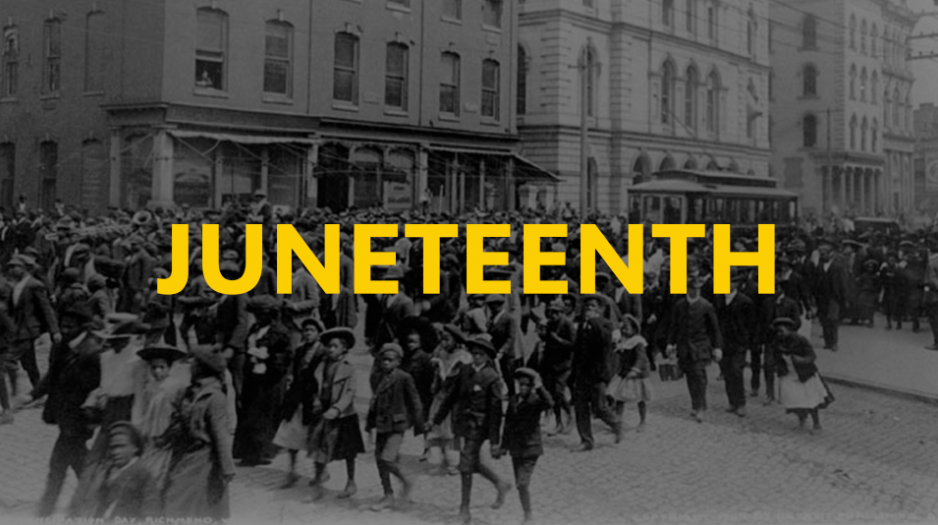
With the surrender of General Lee in April of 1865, and the arrival of General Granger’s regiment, the forces were finally strong enough to influence and overcome the resistance. Upon his arrival, General Granger rendered the following order:
General Order Number 3:
“The people of Texas are informed that in accordance with a Proclamation from the Executive of the United States, all slaves are free. This involves an absolute equality of rights and rights of property between former masters and slaves, and the connection heretofore existing between them becomes that between employer and hired laborer….”
Celebrations date back to 1866, at first involving church-centered community gatherings in Texas. It spread across the South and became more commercialized in the 1920s and 1930s, often centering on a food festival. During the Civil Rights movement of the 1960s, it was eclipsed by the struggle for postwar civil rights, but grew in popularity again in the 1970s with a focus on African American freedom and arts. By the 21st century, Juneteenth was celebrated in most major cities across the United States. Activists are campaigning for the United States Congress to recognize Juneteenth as a national holiday. Juneteenth is recognized as a state holiday or special day of observance in 47 of the 50 U.S. states.
Later attempts to explain this two and a half year delay in the receipt of this important news have yielded several versions that have been handed down through the years. Often told is the story of a messenger who was murdered on his way to Texas with the news of freedom. Another is that the news was deliberately withheld by the enslavers to maintain the labor force on the plantations. And still another is that federal troops actually waited for the slave owners to reap the benefits of one last cotton harvest before going to Texas to enforce the Emancipation Proclamation. All of which, or none of these versions could be true. Certainly, for some, President Lincoln’s authority over the rebellious states was in question. Whatever the reasons, conditions in Texas remained status quo well beyond what was statutory.
The reactions to this profound news ranged from pure shock to immediate jubilation. While many lingered to learn of this new employer to employee relationship, many left before these offers were completely off the lips of their former ‘masters’ – attesting to the varying conditions on the plantations and the realization of freedom. Even with nowhere to go, many felt that leaving the plantation would be their first grasp of freedom. North was a logical destination and for many it represented true freedom, while the desire to reach family members in neighboring states drove some into Louisiana, Arkansas and Oklahoma. Settling into these new areas as free men and women brought on new realities and the challenges of establishing a non-existent status for black people in America. Recounting the memories of that great day in June of 1865 and its festivities would serve as motivation as well as a release from the growing pressures encountered in their new territories. The celebration of June 19th was coined “Juneteenth” and grew with more participation from descendants. The Juneteenth celebration is a time for reassuring each other, for praying and for gathering with family members.
References: Juneteenth, PBS