Curriculum and Training
Advanced, Comprehensive Instruction to Prepare You For Any Career Path
Providing an Ideal Blend of Patient Care, Didactics, and Mentored Research
Clinical TrainingAt the University of North Carolina, Allergy and Immunology clinical training goes beyond simply learning the fundamentals of allergy and immunology diseases. The philosophy of our faculty is to consider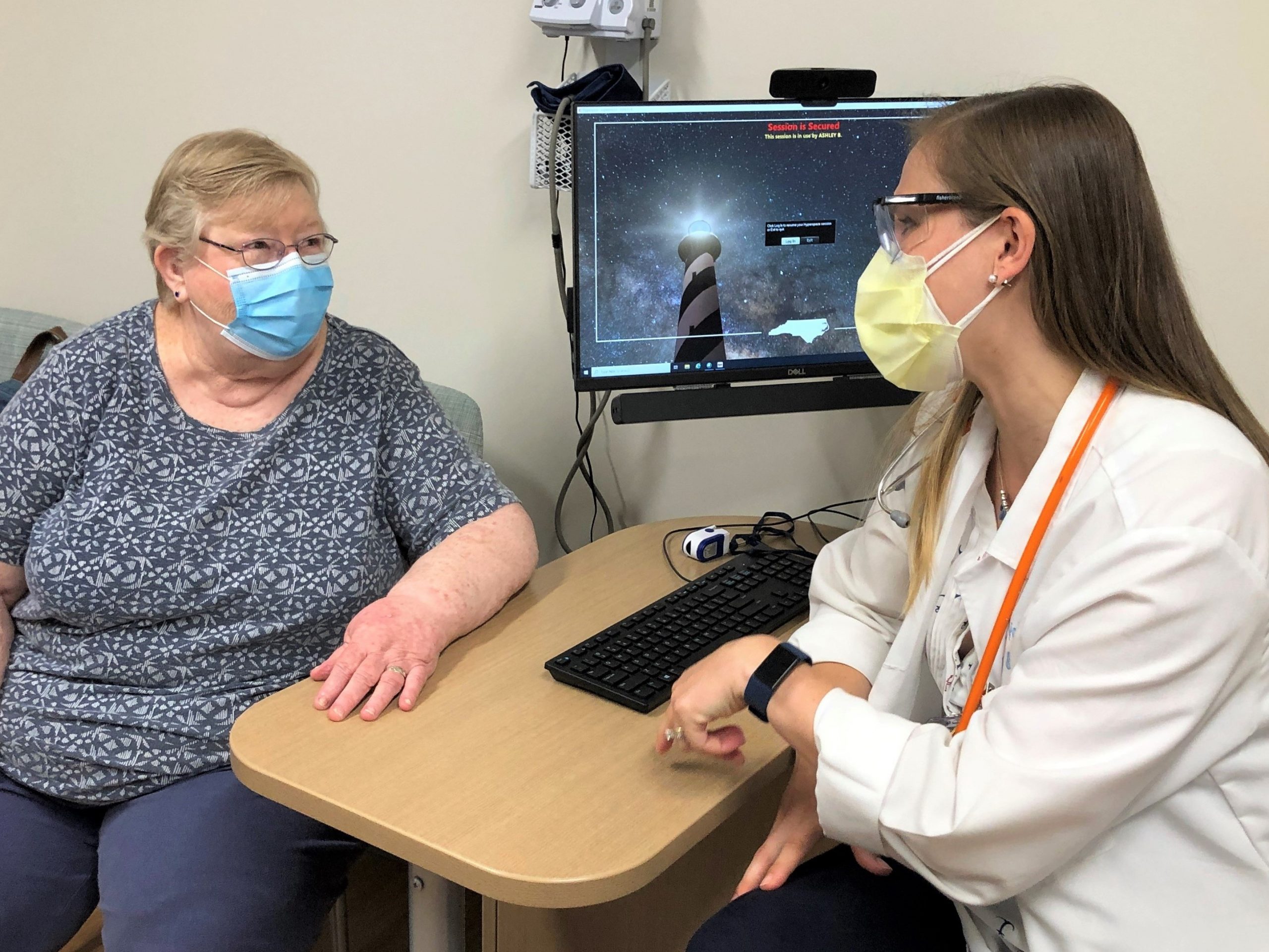 each patient as unique and to focus on what makes that particular patient different from the usual presentations. To this end, we encourage seeking out the latest medical literature and “thinking outside the box,” to provide what our patients have come to expect from UNC allergy and immunology: patient-centric, high quality, cutting edge clinical care.
To best develop this approach to clinical care, fellows learn clinical aspects of Allergy and Immunology in two formats. Within a traditional ‘attending clinic,‘ fellows work side-by-side with our diverse faculty discovering the various possible approaches to different allergy and immunology disease. With our unique ‘continuity clinic,’ fellows then have the opportunity to put this knowledge to direct use through the care of their own cohorts of adult and pediatrics patients that they follow throughout their training. It is the ownership that comes with having your own patients that we believe is essential for each fellow to develop their own style of clinical care that they will take with them into their future careers.
As one of the largest referral centers in the Southeast, our fellows are exposed to a broad range of cases from across the state and throughout our region. In addition, we strongly believe that our fellows should be equally proficient in providing care across the age spectrum. To achieve this, our clinical training is designed to be balanced 50/50 across adult and pediatric experiences. Finally, the unique patient populations at each of our 3 outpatient sites as well as inpatient consultations at UNC Hospitals provides experience across a range of patients in terms of age, race and ethnicity, education and socio-economic backgrounds that is essential in learning to provide patient-centric care.
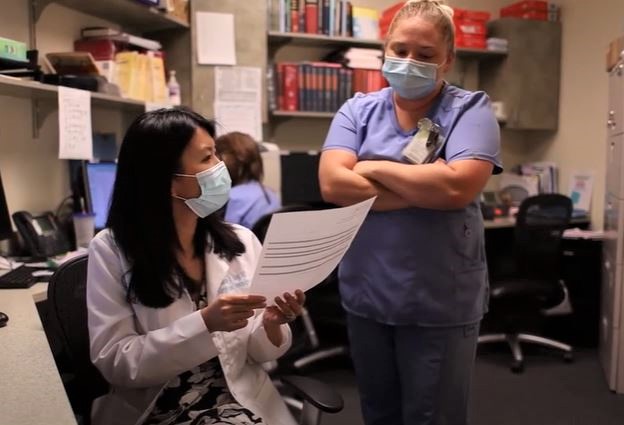 The fellowship program includes four practice settings:
- UNC Allergy and Immunology Clinic at the New UNC Eastowne Medical Office Building
- UNC Children’s Primary and Specialty Care at Carolina Pointe II
- UNC Children’s Allergy & Immunology at Raleigh
- Inpatient Consultations at UNC Hospitals
In addition to the core Allergy and Immunology training, fellows are encouraged to pursue additional learning opportunities through established electives in Rheumatology, Otolaryngology, Dermatology, Infectious Diseases and Pulmonology. Because of the considerable clinical overlap that Allergy and Immunology can have with other specialties, these electives broaden the fellow’s understanding of the complexities of the immune system, further preparing them to be experts in all aspects of Allergy and Immunology.

Didactic training provides the foundation upon which clinical reasoning is applied. Since its inception, the UNC Allergy and Immunology Fellowship Program has maintained its strong emphasis on formal learning through a weekly, dedicated “didactic day” that is protected from clinical responsibilities.
Learning opportunities include:
- Allergy and Immunology “Boot Camp”
- Topic-Based Journal Club
- Allergy and Immunology Case Conferences
- Clinical and Basic Immunology Board Review
- Rheumatology, Allergy & Immunology Grand Rounds
- Internal Medicine and Pediatric Grand Rounds
All fellows are encouraged to attend and participate in scientific conferences to supplement their learning and to showcase their work. The fellowship program provides coverage of clinical duties so all fellows are able to attend the American Academy of Allergy, Asthma & Immunology (AAAAI) meeting each spring. In addition, UNC fellows have routinely presented their work at the annual American College of Allergy, Asthma and Immunology (ACAAI) meeting; the Clinical Immunology Society’s Primary Immunodeficiency Diseases (CIS PID) summer school; the Aspen Allergy conference; the Southeastern Allergy Asthma & Immunology society (SEAAI) conference; and the Regional, State and Local (RSL) meeting of the NC Society of Asthma, Allergy and Immunology.
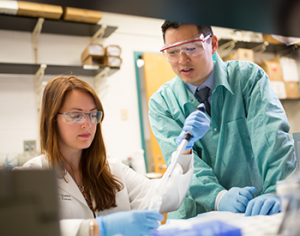
In addition to the 2-year ACGME fellowship program, an optional 3rd year of advanced training in research is available for those interested in pursuing a physician scientist career.
One reason the UNC Allergy and Immunology Fellowship Program is considered one of the best is its strong emphasis in developing skills in research and quality improvement. Even for those who ultimately choose to pursue careers outside of research such as in education, clinical care, industry or otherwise, it is our belief that a meaningful research experience teaches a way of thinking and an approach to problems that makes our trainees stronger, more prepared, and more competitive as they enter the workforce.
As part of their ACGME-accredited training and under faculty member supervision, each fellow designs and conducts an independent research project that is either laboratory-based, epidemiologic, continuous quality improvement, or clinical investigation-based. For those fellows demonstrating the desire and skills to pursue a career as a physician scientist in Allergy and Immunology, funding is available for an additional 3 rd year dedicated to research. To further supplement research training, audited and degree-program course work is also available through the UNC Department of Pediatrics fellowship curriculum, the North Carolina Translational and Clinical Sciences Institute (NC TraCS), and the UNC Gillings School of Global Public Health.
Fellows are connected with faculty advisors from the moment they arrive at UNC. This eases the transition into fellowship and helps to begin discussion about potential career paths. Over the first year, fellows craft Individual Development Plans (IDPs) with their advisors to ensure that the scholarly projects that they pursue are driven in part by their career goals to best position themselves for pursuing future employment. While projects mentored by our allergy and immunology faculty are preferred, projects with outside faculty with relevance to Allergy and Immunology can also be facilitated.
Research interests of our diverse and large faculty group include, but are not limited to, basic science, epidemiological investigation, clinical trials, and quality improvement within the following disease states:
• Asthma
• Atopic Dermatitis
• Immediate-onset IgE-mediated food
• Delayed IgE-mediated food allergy (Alpha-Gal Syndrome)
• Drug allergy
• Eosinophilic Esophagitis
• Autoimmune Diseases
We invite you to further explore the individual interests of each of our faculty to gain a better understanding of the breadth and depth of opportunities available to our Allergy and Immunology fellows.
In addition to numerous opportunities to teach medical students and residents at the bedside and within more formalized settings, our fellows have a unique opportunity to join and participate as an educational leader in the “UNC Academy of Educators.” There are currently over 400 Faculty, Fellow and Resident members participating in the UNC Academy of Educators (AOE) program.
The programming available through the AOE is designed to emphasize teaching excellence in faculty, fellows, and residents, while promoting curricular innovation. Members enjoy many types of opportunities for peer-to-peer leadership and teaching, and additional networking opportunities. The FLAGship and TARHEEL programs within the AOE are two more formalized and robust training opportunities available for ACGME trainees to enhance educational skills.
“My fellowship at UNC has been an incredibly rewarding experience. I appreciated the flexibility to tailor my clinical training to my interests, particularly in asthma. The faculty were not only supportive but truly invested in my growth, creating an encouraging learning environment. Our weekly didactics and journal clubs sparked insightful discussions that deepened my understanding of allergy and immunology. This fellowship has provided me with invaluable clinical training, mentorship, and research opportunities that will shape my career for years to come.”
–Nonie Arora, MD, MBA, 2025 Graduate