Project Planning
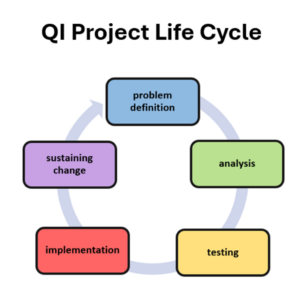
Project planning defines the goal(s), timeline, tasks, resources and strategy for executing a project. It outlines what needs to be done, when they need to be done, and by whom. Another key aspect of project planning particularly in quality improvement is considering the project life cycle (shown on the right). General QI project cycle phases include understanding and defining your project’s problem; analyzing your process and approach to address the problem; testing your change ideas to drive improvement; implementing your ideas that worked well; and sustaining your change that led to improvement. The IHQI resource center pages are organized based on the five stages.
Key Steps
- Review your project goal, project scope, resources, and needed roles and responsibilities.
- Develop a project schedule outlining specific phases of the project and target dates for completion. A Gantt chart is a common tool to use.
- Assign tasks to team members and ensure understanding of expectations and deadlines.
- Track your team’s progress and adjust project metrics and deadlines as needed.
Resources to Get Started
 Use Use |
|
Related QI Concepts
- Communication Plan – Effective communication is key when planning a project and will drive the work.
- Data Collection Planning– Your data collection plan can help track the impact of your improvement work and can also help with your planning process for your project.
- Project Charter – The project charter serves as a guiding document that helps set expectations early on and provides a shared reference point for the team when planning out a project.
- Project Team Composition – A key component of a project plan is considering your team and who is responsible for specific tasks.