
UNC Institute for Global Health and Infectious Diseases researchers have begun phase 2 and phase 3 evaluations of promising treatments for COVID-19. The UNC School of Medicine joins more than 25 initial sites participating in the clinical trials through ACTIV-2, a public-private partnership sponsored by the NIH’s National Institute of Allergy and Infectious Diseases to coordinate COVID-19 research and speed development of the most promising treatments and vaccines. This two-phase trial is being conducted by the AIDS Clinical Trials Group to evaluate the safety and efficacy of treatments for adults who have COVID-19 but do not require hospitalization.
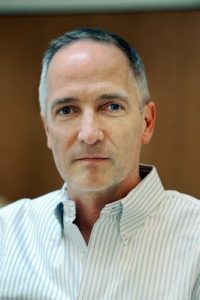
“People living in the Triangle area who have recently been diagnosed with COVID-19 and are not hospitalized have the opportunity to make a huge contribution by participating in this study,” said David Wohl, MD, professor of medicine in the division of infectious diseases and principal investigator for the study at the UNC School of Medicine and a vice chair of the ACTG study team.
The phase 2 evaluation of treatments involves determining the safety, antiviral activity, and ability of investigational agents to reduce the duration of COVID-19 symptoms over 28 days. These agents will be selected based on the presence of in vitro data demonstrating activity against SARS-CoV-2 and phase 1 pharmacokinetics and safety data. Half of the 220 study participants will receive the investigational agent and be compared to the participants receiving a placebo. Any agent that demonstrates positive results and meets study-defined criteria will advance to phase 3, in which 1,000 participants will receive the agent and be compared to 1,000 participants receiving a placebo.
Joseph Eron, MD, chief of the division of infectious diseases, co-chairs ACTG.
“We strongly believe that evaluating antiviral therapy early in the treatment of COVID-19 is essential and effective therapy that will prevent worsening illness and hospitalization and may have the added benefit of reducing the risk of SARS-CoV-2 transmission,” said Eron. “ACTIV-2 is changing our approach to fighting this infection and is a major contribution to the response of science to ending the COVID-19 pandemic.”
Learn more from the UNC Health and UNC School of Medicine Newsroom.