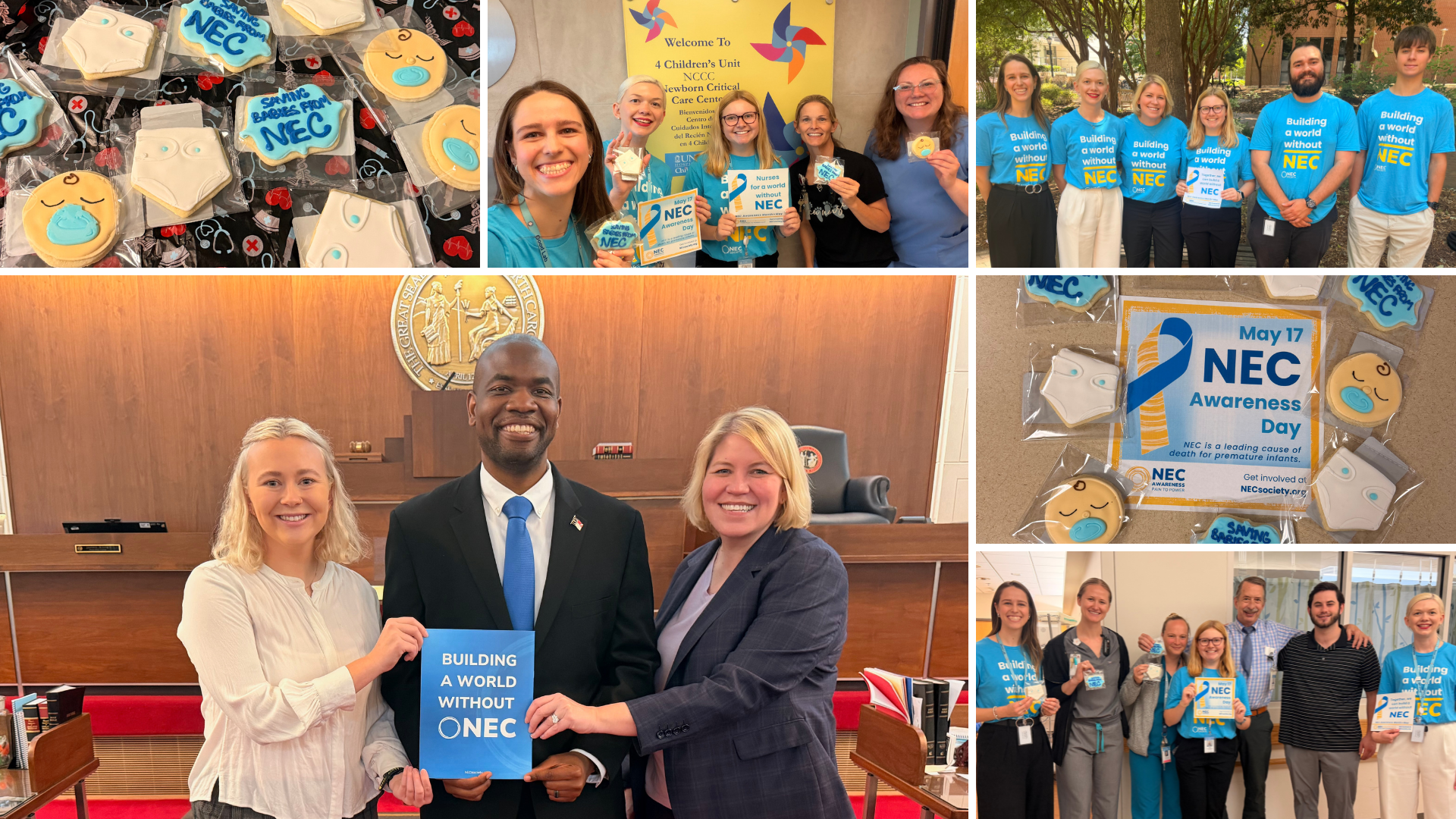
The University of North Carolina Department of Pediatrics is proud to share that May 17 has been officially recognized as Necrotizing Enterocolitis (NEC) Awareness Day in North Carolina, following advocacy efforts involving UNC Children’s clinicians, the NEC Society, and state leaders. This designation, approved by Governor Josh Stein, highlights the importance of raising awareness of a devastating disease that affects the most medically fragile infants.
Advocacy to Elevate Awareness Across North Carolina
Dr. Misty Good, Associate Professor of Pediatrics and Division Chief of Neonatal-Perinatal Medicine, in collaboration with the NEC Society, met with North Carolina Rep. Allen Buansi, representing NC District 56 (Orange Co.), to advocate for statewide recognition of NEC Awareness Day. Representative Buansi has a background in public service and health-related advocacy, supported efforts to elevate awareness through legislative engagement.
This collaboration contributed to Governor Josh Stein’s approval of an annual observance on May 17, aligning North Carolina with national and global efforts to bring attention to NEC. May is widely recognized as NEC Awareness Month, with May 17 serving as a focal point for education, advocacy, and community engagement.
Understanding Necrotizing Enterocolitis
Necrotizing enterocolitis (NEC) is a serious gastrointestinal disease that primarily affects premature and medically complex infants. The disease causes inflammation that can damage and destroy intestinal tissue, sometimes progressing rapidly to life-threatening complications.
NEC often develops within the first weeks of life and may require intensive medical and surgical care. Even with treatment, infants who survive may experience long-term health challenges, underscoring the need for continued research, early detection, and prevention strategies.
National data further emphasize the impact of NEC, identifying it as a leading cause of death in hospitalized premature infants and noting that thousands of babies are affected annually.
For additional clinical and family-centered information, visit the American Academy of Pediatrics NEC overview or this parent resource from HealthyChildren.org.
A Collaborative Commitment to Prevention, Research, and Support
The NEC Society, a leading nonprofit organization dedicated to building a world without NEC, brings together families, clinicians, and researchers to advance progress in prevention and care. Through partnerships like the one led by Dr. Good, advocacy continues to expand awareness while supporting scientific discovery and improved outcomes for infants and families.
At UNC Children’s, this recognition reinforces an ongoing commitment to advancing neonatal care through clinical excellence, research, and family-centered support. Collaborative efforts across the Department of Pediatrics and with community partners play a critical role in improving outcomes for vulnerable newborns across North Carolina. Recent community engagement efforts, including local UNC Health Foundation events supporting NEC research, further demonstrate this commitment.
North Carolina Recognizing May 17

With the establishment of NEC Awareness Day in North Carolina, clinicians, researchers, families, and advocates now have an expanded platform to share knowledge, elevate lived experiences, and promote strategies that may reduce the burden of this disease.
The Department of Pediatrics encourages the UNC community and partners across the state to join in recognizing May 17 each year and to continue working together toward a future where no family is affected by necrotizing enterocolitis.