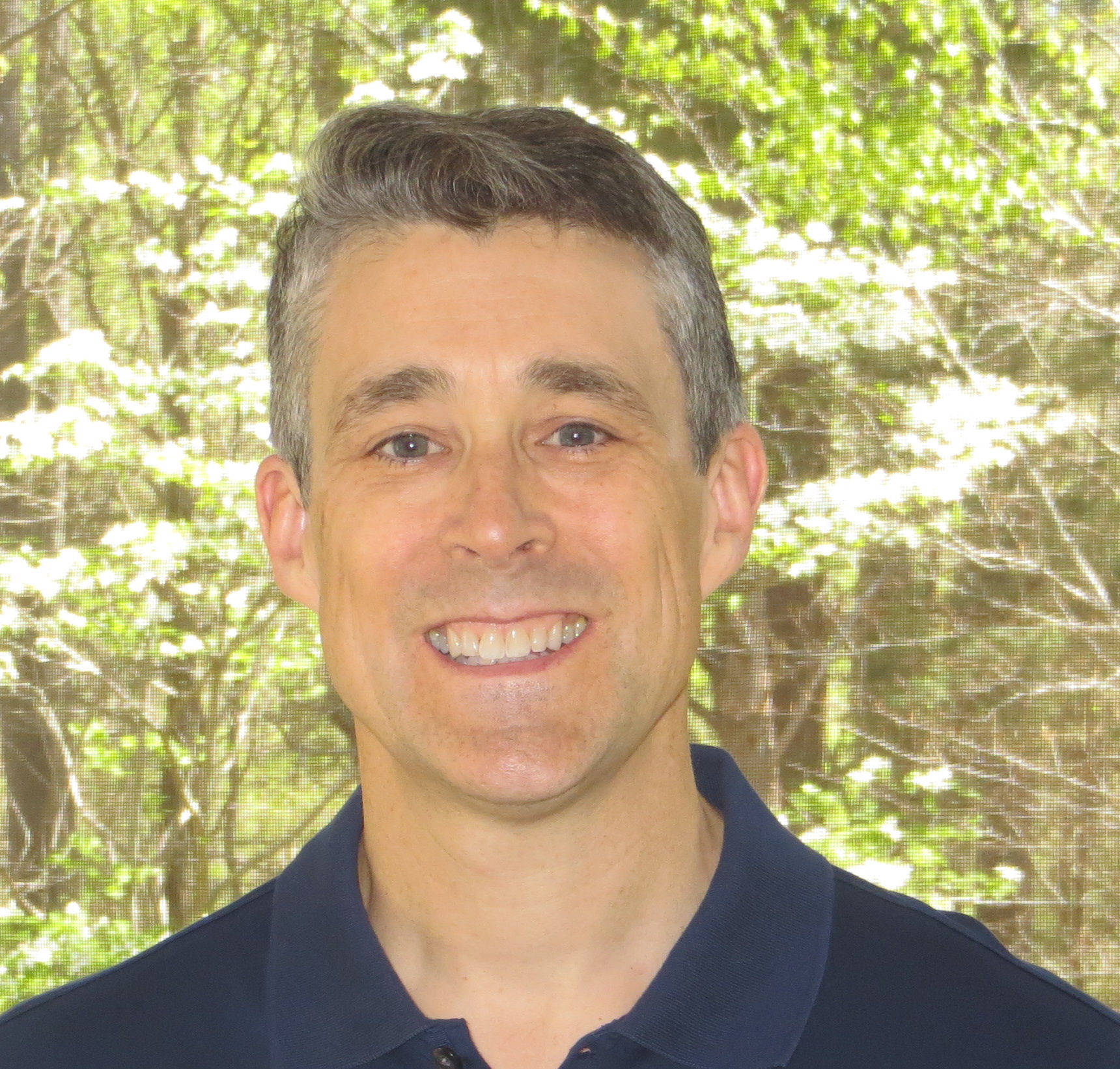
Professor of Chemistry, UNC-CH
Professor of Biochemistry and Biophysics
Professor of Microbiology and Immunology
Director of Structural Biology
Member of Program in Molecular Biology and Biotechnology
Member of the Lineberger Comprehensive Cancer Center
PhD – University of California, Los Angeles

HONORS & AWARDS
- UNC Tanner Award for Excellence in Undergraduate teaching, 2019
- UNC Research Outstanding Mentor Award, 2018
- Fellow, AAAS, 2013
- Academic Leadership Fellow, UNC, 2011
- Academic Leadership Fellow, 2010
- Phillip and Ruth Hettleman Prize for Artistic and Scholarly Achievement, 2004
- Burroughs Wellcome Career Award in the Biomedical Sciences, 1999
RESEARCH
Summary:
The focus of the Redinbo Lab is the examination of the structural and functional basis of cellular function with an eye toward human health. Current projects include discovery and development of drugs that improve chemotherapeutic efficacy for cancer and other diseases, and elucidation of the mechanisms of antibiotic resistance propagation in infectious pathogens. Basic science goals include understanding DNA manipulation and processing, transcription, and protein function during infection and disease.
Core Techniques:
Structural biology, chemical biology, biochemistry, molecular biology, microbiology, cell biology, drug discovery.
SELECTED PUBLICATIONS
 (click for Full Publication List)
2022
- Simpson JB, Redinbo MR. Multi-omic analysis of host-microbial interactions central to the gut-brain axis. Mol Omics. 2022 Dec 5;18(10):896-907. doi: 10.1039/d2mo00205a. PMID: 36169030.
- Simpson JB, Sekela JJ, Graboski AL, Borlandelli VB, Bivins MM, Barker NK, Sorgen AA, Mordant AL, Johnson RL, Bhatt AP, Fodor AA, Herring LE, Overkleeft H, Lee JR, Redinbo MR. Metagenomics combined with activity-based proteomics point to gut bacterial enzymes that reactivate mycophenolate. Gut Microbes. 2022 Jan-Dec;14(1):2107289. doi: 10.1080/19490976.2022.2107289. PMID: 35953888; PMCID: PMC9377255.
- Conway JM, Walton WG, Salas-González I, Law TF, Lindberg CA, Crook LE, Kosina SM, Fitzpatrick CR, Lietzan AD, Northen TR, Jones CD, Finkel OM, Redinbo MR, and Dangl JL. Diverse MarR bacterial regulators of auxin catabolism in the plant microbiome. Nat Microbiol 7, 1817–1833 (2022). https://doi.org/10.1038/s41564-022-01244-3
- Edwinson AL, Yang L, Peters S, Hanning N, Jeraldo P, Jagtap P, Simpson JB, Yang TY, Kumar P, Mehta S, Nair A, Breen-Lyles M, Chikkamenahalli L, Graham RP, De Winter B, Patel R, Dasari S, Kashyap P, Griffin T, Chen J, Farrugia G, Redinbo MR, Grover M. Gut microbial β-glucuronidases regulate host luminal proteases and are depleted in irritable bowel syndrome. Nat Microbiol. 2022 May;7(5):680-694. doi: 10.1038/s41564-022-01103-1. Epub 2022 Apr 28. PMID: 35484230; PMCID: PMC9081267.
- Zhang J, Walker ME, Sanidad KZ, Zhang H, Liang Y, Zhao E, Chacon-Vargas K, Yeliseyev V, Parsonnet J, Haggerty TD, Wang G, Simpson J, Jariwala P, Beaty V, Yang J, Yang H, Panigrahy A, Minter L, Kim D, Gibbons J, Liu L, Li Z, Xiao H, Borlandelli V, Overkleeft H, Cloer E, Major M, Goldfarb D, Cai Z, Redinbo MR, Zhang G. Microbial enzymes induce colitis by reactivating triclosan in the mouse gastrointestinal tract. Nat Commun 13, 136 (2022). https://doi.org/10.1038/s41467-021-27762-y