Faculty
The Center’s research into the causes and mechanisms of addiction provides tomorrow’s best hope for improved treatments and, ultimately, finding a reliable cure. Our researchers investigate the mechanisms of alcohol tolerance, dependence, and withdrawal, as well as damage to the brain, liver, and fetus. We are developing more compounds to be used, alongside standard therapies, to alleviate withdrawal and reduce relapse. The interaction of genetics and environment are studied to better understand the causes of addiction. Physicians conduct clinical trials to evaluate treatments and bridge the gap between research and practice. Center researchers have developed new scientific techniques and protocols in the field of addiction medicine. Better diagnostic tools for physicians and therapists are emerging through Center research.

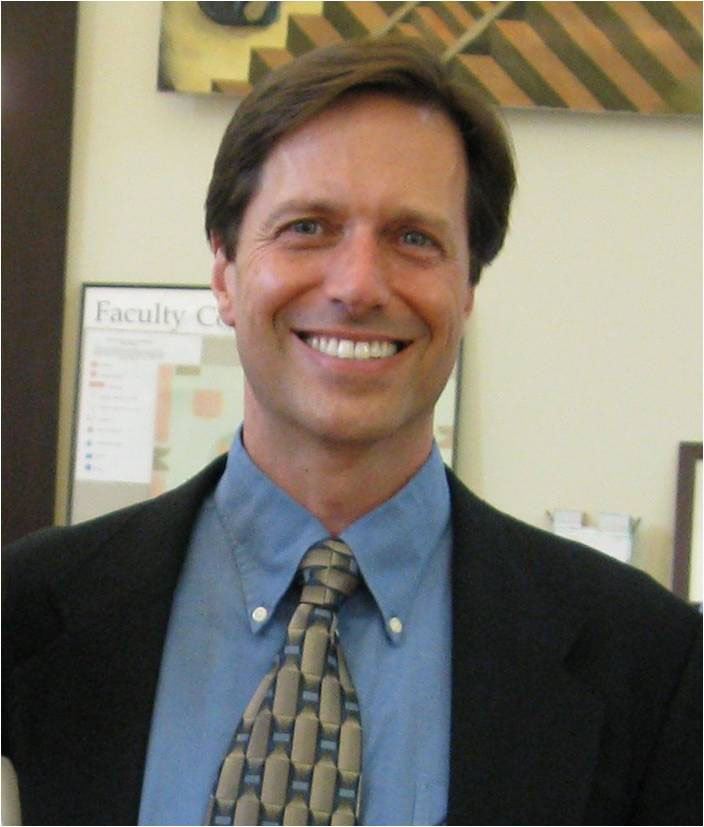
Director, Bowles Center for Alcohol Studies
Thurston-Bowles Bldg, CB #7178
Email tkash@email.unc.edu

Associate Director, Bowles Center for Alcohol Studies
6125A Thurston-Bowles Bldg, CB #7178
Email jbesheer@med.unc.edu





BCAS Emeritus Faculty
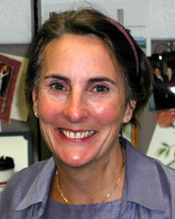

In Memoriam
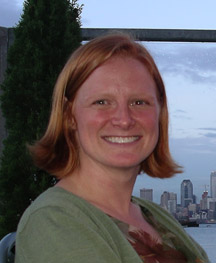
Charlotte Boettiger, Ph.D., a faculty member of the Psychology and Neuroscience Department at the University of North Carolina Chapel Hill and member of the Bowles Center for Alcohol Studies, passed away on March 27, 2025, with her family at her side. She is survived by her husband, Jeffrey Cooney, her two children, Fiona and Avery Cooney, and her parents, Rick and Eileen Boettiger, as well as numerous colleagues, friends, and students who deeply admired her. Charlotte received her A.B. in integrative biology from the University of California – Berkeley, and her Ph.D. in neuroscience from the University of California – San Francisco, studying learning mechanism in birdsong. As a post-doctoral fellow, Charlotte shifted her focus to study the human brain using a combination of brain imaging and behavior, but her appreciation for basic science models remained throughout her career. In 2007, Charlotte joined the faculty at the University of North Carolina Chapel Hill in the Department of Psychology and Neuroscience as an Assistant Professor; she earned tenure in 2015 and was promoted to full Professor in 2021. She was a long-time member of the Society for Neuroscience, the Cognitive Neuroscience Society, and the Research Society on Alcohol. Charlotte’s research focused on the association between alcohol and other substance use disorders and neurocognitive function.
Her technical expertise was in the use of neuroimaging and interventions to probe neurotransmitter function in support of executive control processes in humans. She had a knack for identifying and/or developing behavioral tasks that could parse out specific aspects of a cognitive construct. For example, she developed an fMRI-compatible behavioral task quantifying Now versus Later bias and demonstrated that, even after long-term abstinence, people with a history of alcohol use disorder (AUD) showed elevated Now bias compared to controls. Her lab further found that naltrexone, an opioid receptor antagonist used to treat AUD, shifted Now bias depending on one’s locus of control, which was linked to frontal dopamine function. Her research also focused on efficiency and flexibility of behavioral choice, as learning to replace habitual responses to drug-related stimuli with more adaptive responses is a crucial task in recovery from addiction. Drawing from preclinical models showing that chronic drug exposure impairs stimulus-response (S-R) unlearning, Charlotte established a paradigm to study S-R learning in humans and then identified fronto-striatal circuits in the human brain associated with the ability to learn S-R associations. She demonstrated that people with a history of substance use transition from a goal-directed to a habit-based response strategy more quickly than do people without such history, and that transcranial brain stimulation can modulate this behavior.
Charlotte had an uncanny ability to recruit talented graduate students, postdoctoral fellows, and undergraduate students to the CAB Lab. She was a beloved mentor, encouraging independence in trainees while maintaining availability. She was known to drop everything to track down a paper or protocol for a student, and she saw and nurtured great potential in each of them. Charlotte was a champion of those who could not champion themselves. She spoke out and worked toward social justice, and she valued every student and uplifted voices that might otherwise have been ignored. Charlotte was similarly dedicated as a colleague, taking on consequential administrative work at every level of the university. She was an incredible and reliable collaborator, working with her friends and colleagues to build better, more impactful, and more complete models of the impact of substance use on cognition in the service of understanding functioning of the mind and brain. As a consequence, she was surrounded by colleagues and students who admired and cared for her deeply. We remember her as a scientist who pushed us all to think deeply about how our work could advance understanding of the human condition, and did so with kindness, compassion, and rigor. She leaves a rich legacy embodied by the scientists she trained, a network of collaborators and many friends. She will be deeply missed.
If you wish to leave a remembrance to Charlotte for her family, you can do so here: https://obituaries.seattletimes.com/obituary/charlotte-cooney-ph-d-1092839235
If you would like to support a graduate student award in honor of Charlotte Boettiger, please donate to the Human Neuroscience Group in honor of Charlotte: https://give.unc.edu/donate?f=104566&p=psyc

George R. Breese, PhD, was a longtime faculty at the University of North Carolina School of Medicine and the Bowles Center for Alcohol Studies. Dr. Breese passed away in late June following several years of poor health. Dr. Breese earned his Bachelor’s in Pharmacy from Butler University in 1959, a Masters in Pharmacology from Butler University in 1961, and a PhD in Pharmacology from University of Tennessee in 1965. He had additional training at University of Arkansas Medical School and as an NIH fellow with Dr. Irwin Kopin from 1966-68. He joined the UNC faculty in 1968 as an Assistant Professor of Psychiatry and Pharmacology at the Brain Development Research Center. He was an ACNP Member Emeritus, having been accepted in 1973. At UNC he became a Full Professor in 1977. He joined the Bowles Center for Alcohol Studies in 1995 and was named a John Andrews Distinguished Professor in 2008. He retired from UNC in 2020. For much of his career he studied the mechanisms of drug-induced changes in behavior, particularly antidepressants, stimulants and alcohol. Early in his career he focused on brain dopamine (DA), norepinephrine, and serotonin. He was among the first to study 6-hydroxy-dopamine, (6-OH-DA) and determined it was a selective dopamine neuron toxin (1); this became a popular method contributing to studies on addiction and Parkinson’s disease. Using 6-OH-DA in neonatal rats, he developed a model of Lesch-Nyham syndrome (2). Later in his career he discovered multiple withdrawals from alcohol “kindled” inferior collicular seizures (3), which led to seminal studies related to multiple alcohol withdrawals from moderate ethanol exposure leading to increased increasing anxiety (4). This finding has emerged as highly relevant to understanding the human experience and alcohol use disorders (AUD). His mechanistic studies uncovered changes in GABA receptors, in corticotropin-release factor (CRF), and in brain proinflammatory cytokines within the central amygdala that continue to be investigated broadly in studies on AUD (5). His discovery that multiple ethanol exposures cause progressive increases in anxiety continue to provide potential druggable targets for treatment of AUD. He trained countless scientists in his lab, many of whom continue to have productive careers. His passion for science was remarkable. He was always ready to talk about science and how to push ideas forward for better AUD treatments. He will be missed, but his work will continue to inspire us all.
- Breese, G.R. and Traylor, T.D. Effects of 6- hydroxydopamine on brain norepinephrine and dopamine: Evidence for selective degeneration of catecholamine neurons. J Pharmacol Exp Ther. 2020:174:413-420.
- Breese, G.R., Criswell, H.E., Duncan, G.E., and Mueller, R.A. Dopamine deficiency in self-injurious behavior. Psychopharmacol Bull. 1999:25:353-358.
- McCown, T.J., and Breese, G.R. Multiple withdrawals from chronic ethanol “kindles” inferior collicular seizure activity: evidence for kindling of seizures associated with alcoholism. Alcohol Clin Exp Res. 1990:14:394-399.
- Overstreet, D.H, Knapp, D.J., and Breese, G.R. Modulation of multiple ethanol withdrawal-induced anxiety-like behavior by CRF and CRF1 Pharmacol Biochem Behav. 2004:77:405-413. PMC2864717.
- Whitman BA, Knapp DJ, Werner DF, Crews FT, Breese GR. The cytokine-mRNA increase induced by withdrawal from chronic ethanol in the sterile environment of brain is mediated by CRF and HMGB1 release. Alcohol Clin Exp Res. 2013:37:2086-2097.