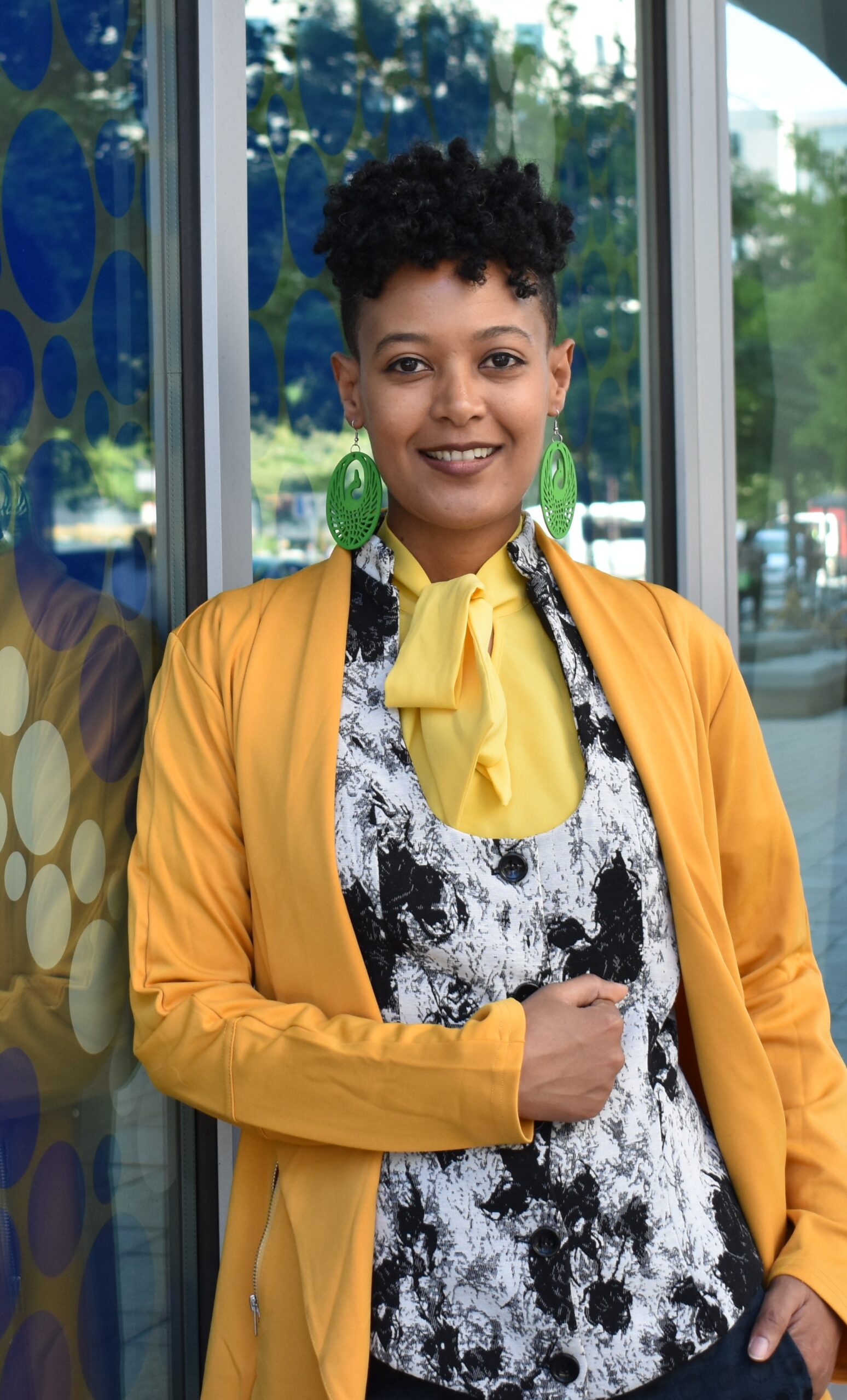
Assistant Professor
(PhD – University of North Carolina at Chapel Hill)
Member of the Lineberger Comprehensive Cancer Center, Department of Nutrition, and Computational Medicine Program
TRAINED MENTOR
Research: Cancer metabolism, Obesity, Diabetes, Cell signaling, Metabolism, Redox homeostasis, Phosphoproteomics, Metabolomics, Mass spectrometry, Computational modeling, Biochemistry.
Honors & Awards
- NIGMS MOSAIC Postdoctoral Career Transition Award to Promote Diversity (K99/R00), 2023
- Eddie Mendez Postdoctoral Scholar Symposium, Fred Hutch Cancer Center, 2023
- UNC Rising Star Program, Dept of Pharmacology, UNC-CH, 2023
- UVA Emerging Leaders in BME Symposium, Dept of BME, UVA, 2022
- Future Leaders in Biochemistry & Biophysics Symposium, Dept of B&B, U. Penn., 2022
- Burroughs Wellcome Fund – PDEP, 2021
- Leading Edge Fellow, 2021
- Convergence Scholar, MIT Center for Precision Cancer Medicine, Koch Institute, 2020
- HHMI Gilliam Fellowship, 2016
Research
Research topics: Cell signaling, metabolism, redox homeostasis, phosphoproteomics, metabolomics, mass spectrometry, computational modeling, biochemistry.
Research summary: Determine how cellular signaling networks regulate oxidative stress response (OSR) and cellular homeostasis. The Tamir lab aims to decipher dysregulated OSR in diseases by utilizing integrative Omics, structural analysis, and computational modeling to evaluate regulatory signaling inputs that alter metabolism in obesity and cancer.
Systems Metabolism and Signaling Lab
Oxidative stress, a byproduct of energy production essential for all living organisms, arises from an imbalance of reactive oxygen, nitrogen, and carbonyl species (ROS/RNS/RCS). These highly reactive molecules present a significant waste management challenge within cells. Through evolution, oxidative stress response (OSR) pathways have emerged as critical guardian of cellular homeostasis, adept at neutralizing potentially harmful reactive molecules. Dysregulation of OSR—whether due to insufficient or excessive capacity to resolve oxidative damage—is a hallmark of numerous human diseases. For example, cancer cells co-opt OSR pathways by rewiring signaling and metabolism which leads to the development of resistance to chemotherapy.
The Systems Metabolism and Signaling Lab (i.e. Tamir Lab) seeks to unravel the biochemical intricacies of how cells defend against oxidative stress by investigating the cell signaling-mediated regulation of metabolism. We aim to address fundamental questions about the biochemistry of OSR regulation, including:
- How is information transferred across biomolecules, from the phosphoproteome to the metabolome?
- What is the role of phosphorylation in shaping the structure and function of antioxidant enzymes?
- Where do cell signaling pathways intersect with metabolism during OSR?
- What are the signals driving dysregulated OSR in diseases?
To tackle these questions, we employ a multidisciplinary approach that integrates biochemistry, proteomics, metabolomics, molecular biology, and systems biology. Our work focuses on dissecting the regulatory networks governing OSR and identifying targetable pathways implicated in obesity and cancer. As a member of the Lineberger Comprehensive Cancer Center, Department of Nutrition, and Computational Medicine Program, we bridge molecular insights with systems-level understanding as we strive to illuminate novel and effective strategies for therapeutic interventions. We will apply the fundamental knowledge in:
- Obesity driven metabolic dysfunction and diabetes by asking how dietary supplement with antioxidants abrogate onset of insulin resistance.
- In cancer cell metabolism by asking how signaling inputs on antioxidant enzymes alter systemic OSR and metabolic reprogramming to nominate potential vulnerabilities in treatment resistant cancers.
Our approaches: machine learning, phosphoproteomics, metabolomics, computational structural modeling, biosensor-based high content screening, and CRISPR-based genome editing
The Systems Metabolism and Signaling Lab is committed to fostering a collaborative, creative, and diverse group that is invested in mutual growth.
Biography
Dr. Tigist Tamir received her B.S. in Biology and Bio-Mathematics from the College of William and Mary, and her Ph.D. in Pharmacology from the University of North Carolina at Chapel Hill in Dr. Ben Major’s lab. Her research focus is on identifying the convergence between cell signaling and metabolism. Dr. Tamir conducted her postdoctoral training in the laboratory of Dr. Forest White, at the Koch Institute for Integrative Cancer Research at MIT. In her present work, Dr. Tamir employs a multidisciplinary approach utilizing biochemistry, multi-omics, and computational models to investigate the intricate regulation of oxidative stress response within complex signaling and metabolic networks.
Publications
link to all publications for Tigist Tamir
Contact Information Email
Office: 3046 Genetic Medicine Building
Lab: 3049E and 3049F Genetic Medicine Building
120 Mason Farm Rd, CB 7260, Chapel Hill, NC 27599-7260
Website link: Systems Metabolism & Signing Lab