December 8, 2019

Mackman

The Mackman lab studies the roles of tissue factor (TF), coagulation proteases and protease-activated receptors (PARs) in health and disease. We have established a variety of different disease models and have a larger number of transgenic mice deficient in different coagulation factors and PARs, as well as mice with low levels of TF and mice with cell type-specific knockout of TF, PAR1 and PAR2. We also use antibodies and pharmacological inhibitors of FXa and thrombin.

December 6, 2019

Mooberry

To date, my research interests have focused primarily on the investigation of the coagulation system in inflammatory disorders with a thrombotic phenotype. There is known to be a close interplay between inflammation and coagulation, however, not all inflammation predisposes to thrombosis. My work aims to help better understand the role and mechanism(s) of coagulation activation in certain inflammatory disorders, and how this coagulation activation may lead to both increased thrombotic risk as well as heightened inflammation through positive feedback mechanisms.

December 5, 2019

Nichols

I am the Director of the Francis Owen Blood Research Laboratory (FOBRL), the mission of which is to reduce human and animal suffering from bleeding, thrombosis and atherosclerosis by the study of unique, genetically-determined animal models of these diseases. The FOBRL was established in 1960 by Dr. Kenneth M. Brinkhous and has provided work and study opportunities for many undergraduate, M.D., D.V.M. and Ph.D. students, post-doctoral students, and faculty at UNC and from several institutions worldwide.

December 5, 2019

Obadina

I am a clinical researcher focused on identifying modifiable risk factors to improve survival and quality of life of adults with sickle cell disease. My ongoing research interests are to characterize the phenomenon of occult hypoxia in high-risk subset of adults with sickle cell disease, and to explore the experience of pregnancy and its complications in the sickle cell population. As a member of the BRC, I collaborate with colleagues to understanding the impact of red blood cell and placental health on pregnancy outcomes.

December 5, 2019

Pawlinski

One area of interest is to investigate how the coagulation cascade contributes to the pathophysiology of neuroinflammation using mouse models of stroke and multiple sclerosis. We also study mechanisms of coagulation activation and clot formation in mouse models of sickle cell disease, and our goal is to identify the best mechanism of anti-coagulation to reduce the incidence of vaso-occlusive crisis, chronic inflammation, and end-organ damage associated with this blood disorder. The BRC enables us to interact with clinicians that are experts in sickle cell disease, which elevates the clinical relevance and impact of our research.

December 5, 2019

Polacheck

My lab develops microfluidic models of the blood and lymphatic vasculature for basic science and translational purposes. Specific projects relevant to the Blood Research Center are: 1) Understanding the role of Notch receptor signaling in vascular endothelial adherens junction assembly and stability; 2) A nascent collaboration with Dr. Prabir Roy-Chaudhury at the UNC Kidney center to screen patient plasma in microfluidic models of the vasculature to predict risk of cardiovascular complications in kidney disease.

December 5, 2019

Raffield

In my research program, I use human genomics and multi-omics to understand inherited and environmental risk factors for cardiometabolic diseases, Alzheimer’s disease and related dementias, and related quantitative traits, including hematology and hemostasis phenotypes. I work to link genetic variants to function through integration with multi-omics data, including transcriptomic, methylation, proteomic, and metabolomic measures. This work has important implications for disease risk prediction and improved understanding of disease biology. A focus on understudied populations is a central theme of my research; human genetics and molecular epidemiology research is dramatically unrepresentative of global populations, with for example >90% of genome-wide association study participants of European descent. As complex trait genetics moves into the clinic, increasing representativeness is essential to ensure that all populations benefit from the promise of precision medicine. Characterization of population-differentiated variants with impacts on hematological parameters, for example sickle cell trait and Duffy-null status, is an ongoing area of research for our lab, as are hematological trait polygenic risk scores and rare variant genetic discovery efforts. I play a leadership role in collaborative efforts in human genetics, for example serving as a Genetics Working Group co-chair for the Jackson Heart Study (JHS), one of the largest population-based studies of African American adults, and as a co-convener of the Multi-Omics working group for the NHLBI Trans-Omics for Precision Medicine (TOPMed) program.

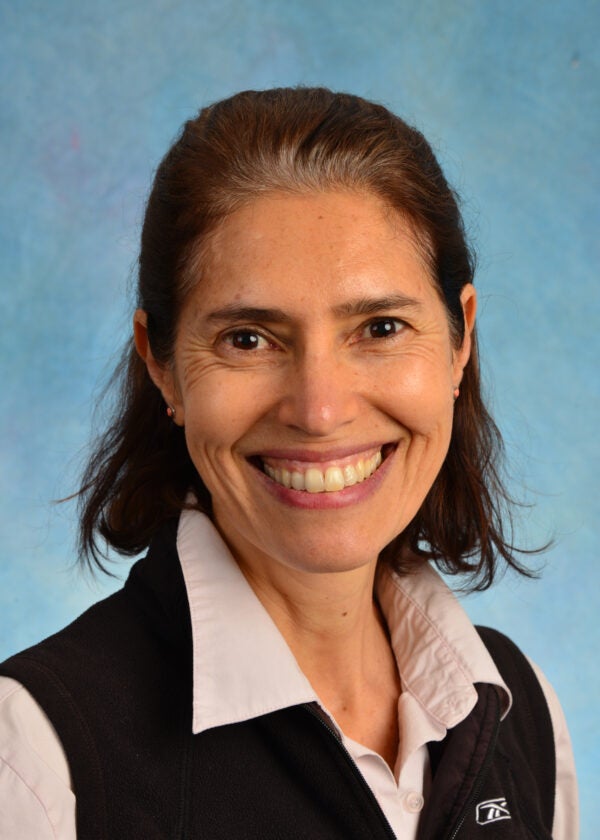
Silvia Ramos

December 4, 2019

Ramos

I am an enthusiastic and solid medical scientist, passionate about RNA and hematopoietic stem cells (HSC), an extremely relevant research area of interest of the BRC. Eventually, I aim to improve our transfusion and bone marrow transplant practices based in novel discoveries. Our lab is committed to embrace individuals from all backgrounds and groups, including, but not restricted to those from historically excluded minorities. The diversity of our team creates an inclusive, collegial, supportive-equitable team, sustained by our different backgrounds united towards scientific understanding. We consider the education process as being dynamic and transformative. In ways that that the unforeseen novel knowledge leads a to an empowered society. These are also goals shared by the BRC mission at UNC.