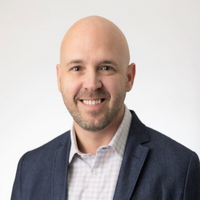
Benjamin Cobb, MD
Associate Professor of Anesthesiology
Assistant Residency Program Director
Our program meets all the requirements of the American Board of Anesthesiology (ABA) and is fully accredited by the Accreditation Council for Graduate Medical Education (ACGME).
The mission of our residency is to train outstanding consultant anesthesiologists by providing a diverse, rigorous clinical experience combined with a carefully planned didactic curriculum. Our residents gain exposure to a wide array of patient populations and cases, including Level 1 trauma and solid organ transplants. Additionally, our program is unique in its focus on professional development, advocacy and wellness.
Thank you for your interest in UNC Anesthesiology!
Associate Professor of Anesthesiology
Assistant Residency Program Director

Associate Professor of Anesthesiology
Associate Residency Program Director

Edward A. Norfleet, MD ’70 Distinguished Professor of Anesthesiology
Residency Program Director
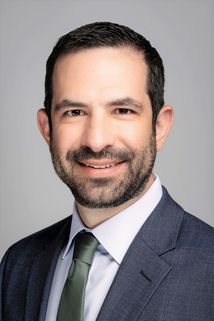
Professor of Anesthesiology
Vice Chair of Education

Professor and Chair of Anesthesiology

Professor of Anesthesiology
Division Chief of Cardiothoracic Anesthesiology
Associate Residency Program Director
Residency Recruitment Chair

The Academic Medicine Rotation is a month-long non-clinical rotation where the interns are exposed to aspects of medicine not easily taught in the OR. The focus is on professionalism, teaching, leadership, business of medicine, public speaking, and quality improvement. During the month each intern will design, implement, and present a quality improvement project.

A Wellness Committee was formed in 2015 composed of faculty members, residents, and CRNAs. The purpose of the Department of Anesthesiology Wellness Committee is to promote the physical and emotional health and well-being of all faculty and staff.

Each resident spends a total of 2-4 weeks dedicated solely to learning TEE (an additional 4 weeks of elective time is possible during CA-3 year). During these 2-4 weeks, the resident performs all TEE exams for cardiac cases, in addition to all exams requested for non-cardiac cases. Residents are one-on-one with a Cardiac Anesthesiology attending for each exam.

To keep up with the evolving nature of medicine and anesthesiology, a Point of Care ultrasound (POCUS) curriculum has been developed and includes hands-on workshops, morning lectures, and online presentations and videos regarding cardiac, lung, airway, and gastric exams.

Each resident spends two rotations dedicated solely to performing peripheral nerve blocks and catheters. Each resident far exceeds the minimum number of nerve blocks required by the ACGME. Upon leaving UNC, our graduates often feel like the experts in ultrasound-guided regional anesthesia in their respective practices.

We support individual residents with academic aspirations who wish to allocate a significant portion of their residency towards protected research time. A 6-month research track is available for residents in their final year of training, who desire to pursue an intensive research project.

We send two residents annually to the American Society of Anesthesiologists (ASA) Legislative Conference, with all expenses paid by the department. At this conference, residents learn about the advocacy efforts of the ASA and have an opportunity to meet Senators, Governors, and other legislators to learn about important issues facing our specialty.

We send two to three CA-3 residents each year to spend a month at hospitals in Kenya, Malawi and Ethiopia. They are given a great deal of autonomy in the OR and ICU and are able to care for patients with unique conditions and pathologies seldom seen in the U.S. Additionally, they learn how to provide safe anesthesia without the advanced technology and equipment we have here in the U.S.

Each year, rising CA-2s may apply for the MHA position. This position begins during the CA-3 years with dedicated time to completing coursework for the MHA degree. Chosen residents stay on an additional year for a half fellow/half attending position to complete to remainder of the MHA coursework.

Each resident spends two weeks providing anesthesia or sedation for pediatric patients in unique settings, including the MRI, CT, Nuclear Medicine suites and minor procedure rooms. This rotation prepares you to provide anesthesia services outside the comfort of the operating room environment.

The Consortium for Anesthesia Patient Safety and Experiential Learning (CAPSEL) provides innovative and extensive course offerings to enhance anesthesiology training and patient safety throughout the hospital. UNC is leading the nation in simulation preparation with the advent of the Objective Structured Clinical Examination (OSCE) portion of the Applied Examination commencing this year.

Residents who have completed 6 months of anesthesia training and scored above the 30th percentile on their most recent In-training Examination (ITE) are eligible to moonlight on the weekends. Residents are compensated on an hourly basis for these shifts.

Eight of our faculty members serve as official Oral Board Examiners for the American Board of Anesthesiology. Our residents benefit heavily from their insight into the oral board exam. Each resident participates in two “mock” oral board exams every year with various faculty members. Our residents feel very well prepared for the Oral Boards and perform exceptionally well each year. Oral exams are recorded for residents to review their individual performances and faculty feedback in the future.
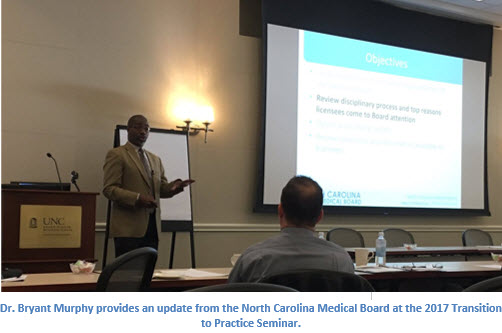
We offer a series of lectures by faculty and other visiting lecturers that give residents important tips and advice to transition smoothly into practice.

We are one of only three hospitals in North Carolina that offer major organ transplant services. As a result, you will have the unique opportunity to deliver anesthesia care for liver, heart, lung, kidney, and pancreas transplant patients.
We offer departmental educational sessions throughout the week. Our residents regularly participate in preparatory sessions for the ABA written and oral boards as well as the OSCE exam. Additionally, our residents play an active role in Morbidity and Mortality Conference, Chair’s Conference, and others. Regular subspecialty conferences help provide additional exposure to topics such as point-of-care ultrasound (POCUS), pediatric anesthesiology and transesophageal echocardiography (TEE). We utilize the expertise of our education specialist and renowned faculty to incorporate active learning techniques. Our department’s TEACHER lab aims to improve medical education in anesthesiology through the introduction of innovative curriculum and the application of evidence-based instructional practices.
Our quarterly Journal Club program is geared toward exploring the critical aspects of research study design and manuscript preparation.
Introductory sessions are geared towards new residents and concentrate on research methodology and manuscript preparation. Advanced sessions are geared toward discussing landmark articles in anesthesiology as well as research studies conducted by members of our department. Our program additionally holds Journal Club to benefit residents when the department hosts visiting professors.

Our intern year is a clinical base year where residents will rotate through various medicine, surgical, and pediatric specialties. Additionally, we include anesthesia-related rotations such as chronic pain, academic medicine rotation, and transition to anesthesia. At the end of the clinical base year, residents have the opportunity to be paired with more senior residents to smoothly transition into the anesthesia years of residency.
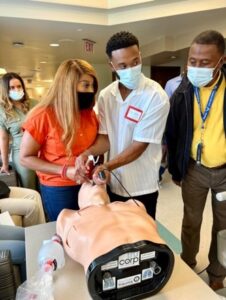 Our Departmental Wellness Committee was founded in 2015 and is composed of faculty, residents, CRNAs, and support staff. The purpose of the committee is to promote the physical and emotional health and well-being of all departmental members. Activities include: