Breast Density
What is breast density?
• Breasts contain two types of tissue: 1) Fibroglandular and 2) Fat.
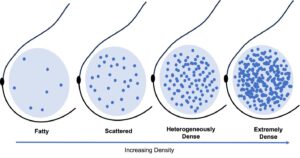
• Breast density refers to the amount of fibroglandular tissue in the breasts compared to fat. The more fibroglandular tissue you have, the more dense your breasts are. The more fat you have, the less dense your breasts are.
How is breast density determined?
• Breast density is determined by the amount of fibroglandular seen in your breasts seen on your mammogram and reported by the radiologist, the doctor reading your images.
What are the breast density categories?
• There are four ways to explain your breast density on your mammogram. The names are listed here in increasing density (more fat to less fat).

What causes differences in breast density?
- Breast density is mainly determined by your genes. Just like the color of your eyes or hair is determined by your genes.
- Your breasts may have more fat (less dense) in them with weight gain or as you go through menopause.
- Your breasts may have more dense tissue (less fat) in them when you are younger, if you recently gave birth and are breast feeding, or with use hormone therapy.
Why is breast density important?
- Breast density is important because it can affect how well the doctor can look inside your breast on the mammogram.
- Denser breasts can make it harder to see things that might be hiding in the breasts, such as cancer. Dense breast tissue is white on your mammogram, but cancer is also white on a mammogram and can hide in denser breasts.
- Increased breast density is also related to a small increase in the risk of breast cancer.
- Because breast density is important, North Carolina and the federal government requires that you are told if they have dense breasts. If your breast density is category “C-Heterogeneously Dense” or “D-Extremely Dense,” you will receive a letter after your mammogram to let you know.
- If you have dense breasts, you may benefit from more breast imaging in addition to your yearly mammogram to detect cancer sooner.
- Regardless of your breast density, it is important to tell your doctor any time you notice changes in the feel or appearance of your breasts.
- Let your doctor know about any personal or family history of breast conditions so the best breast screening plan for you is made.
- Questions: The UNC Mammography Clinic can be reached at (984)-974-8762 if you have any questions.