Transitioning from Peds to Adults
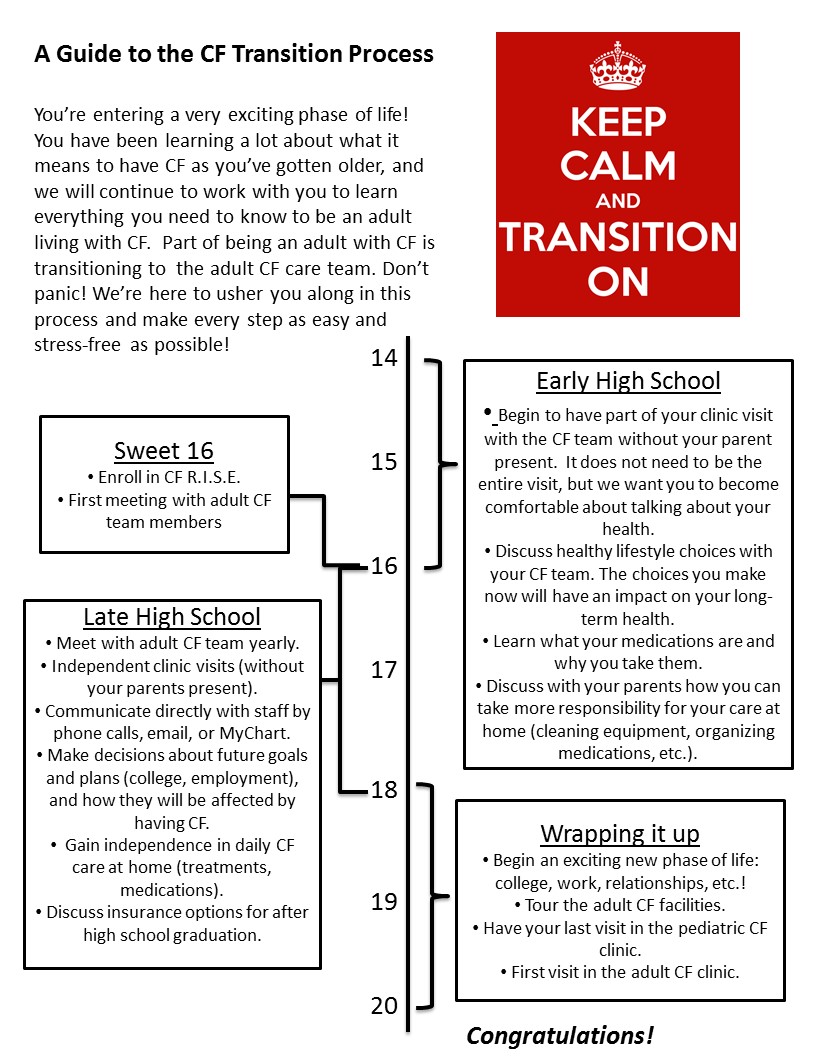
Transition is a change from one state to another. In CF, the goal of transition is to help young people build knowledge, gain skills, and move from the pediatric clinic to an adult clinic when the time comes. The UNC CF Center has created a comprehensive CF transition program to make sure young people with CF are prepared for their lives as adults with CF and to make moving to the adult clinic more seamless. Pediatric and adult care providers are important members in this program, though patients and family members play the most crucial role.
Preparing for transition involved practicing self-care skills, learning how CF might affect your life as an adult (college, work, children, etc.), taking responsibility for daily CF therapies and clinic visits, building self-reliance, gaining knowledge, and becoming more independent. By focusing on wellness and the social, emotional, and developmental effects of CF we hope to guide young people as they build a solid foundation for their life as a successful adult with CF.
The core components of our transition process include:
- Starting early! Pediatric providers start talking about transition from day 1, though most of the work starts in early adolescence.
- A Transition Team made up of members from both the adult and pediatric clinics that focuses specifically on CF transition at UNC. The Team meets regularly to troubleshoot problems and make transition smoother for everyone.
- CF R.I.S.E. is an online program for people 12 and older to help them learn skills, set goals, and gain independence. An overview of CF R.I.S.E is available here.CF R.I.S.E. can be accessed at here.
- Providing a welcome booklet that introduces the adolescent and their family to the who/what/where of the Adult CF Clinic
- Directed handoffs from each pediatric provider to their counterpart adult provider; i.e. CPP-to-CPP, dietitian-to-dietitian, and so on<
- Feedback to the Peds Pulmonary team to improve the process! We are always trying to improve CF transition at UNC and would appreciate feedback on transition experiences (positive and negative), both from people who transitioned from the UNC pediatric clinic and from people who came from other care centers.