Welcome to the Cystic Fibrosis and Pulmonary Diseases Research and Treatment Center!
Director's Introduction to the CF CenterDr. Richard C Boucher, Kenan Professor of Medicine, Director of Cystic Fibrosis Center The CF Center at the University of North Carolina at Chapel Hill traditionally had a single goal: to “cure” CF lung disease. To this end, we assembled a broad-based biomedical research team to tackle this goal. Thus, we have wide-ranging skills in ion transport physiology (Ussing chamber, patch clamp, confocal surface liquid imaging), mucus cell/mucin secretion biology and biochemistry, transgenic and gene-targeted mouse models, in vivo measures of mucociliary clearance and measures of mucin concentration/hydration, and Phase I clinical trials. In addition, we have added expertise focused on specific CF microbiologic problems of the lung, including Pseudomonas aeruginosa, anaerobic bacteria, and now Burkholderia cepacia. These efforts are complemented by a major effort to identify genetic modifiers of all facets of CF airways pathogenesis. Thus, the airways pathobiology/therapeutics efforts have produced multiple collaborations within the UNC CF Center, multiple national/international collaborations, and indeed, collaboration with the CFF Mucus Consortium and Gene Modifier groups. Thus, the UNC CF Center has now been organized to provide the maximum technical and intellectual support to both goals, with a common focus on the rapid “translation” of basic science insights into the clinical patient care arena. The centerpiece of the UNC CF Center is the network of Core Laboratories that underpin all CF research at UNC. As a group, the Cores operate under two common themes. First, the Cores provide access for UNC CF investigators to a broad range of quality-controlled, diverse reagents and technologies. Second, the Cores provide a strong intellectual/research contribution to the UNC CF Center by virtue of the fact that the Cores are led by talented and productive scientists. Indeed, our three major Cores ( the Tissue Procurement and Cell Culture Culture Core, the Molecular Biology Core, and the Mouse Models Core) have become resources to universities both nationally and internationally, and indeed to CFFTI and industry collaborators, to make available reagents and expertise to CF investigators in need of cellular, molecular, and mouse reagents.
[top] What is Cystic Fibrosis?Cystic Fibrosis (CF) is the most common lethal genetic disease in the Caucasian population, affecting one in 3300 births. Other ethnic populations are affected less frequently, ranging from one in 10,000 - 15,000 births in Hispanic and African-American populations to one in 30,000 Asian births. The CF gene codes for a protein responsible for controlling salt and water transport across the cells lining the lung, pancreas, and other organs. When this gene is abnormal, secretions in these organs become dehydrated and sticky, and eventually clog airways. Abnormal secretions may also block other organs (pancreas, intestines, male reproductive tract, bile ducts) as well. CF patients have a number of common symptoms, which may include: salty-tasting skin; persistent coughing, wheezing, or recurrent pneumonia; failure to gain weight despite a big appetite; and frequent, bulky stools. The standard test used to diagnose CF is the sweat test, which very simply and painlessly measures the amount of salt in sweat. Direct testing for abnormalities in the CF gene (from a blood sample) is possible most of the time. What are the Current Treatments?Treatment for CF is based upon clearing the thick build-up of secretions in the airway using chest percussion (e.g. clapping hands on the back and chest), inhaled treatments, and exercise. Antibiotics to fight the particular bacteria typically associated with chest infection in CF patients are used when the amount of infection becomes problematic, and may be administered by mouth, inhaled, or intravenously. The maintenance of proper nutrition is also essential: a high calorie diet, supplementation of certain vitamins, and the use of enzymes that help to digest meals are all necessary. The CF Center achieves its purpose through:
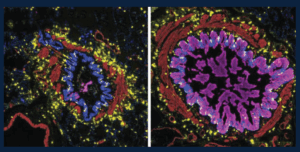
[top] Banner graphics courtesy of S. Keilson, using image material from Dr. Scott H Randell (green and red fluorescent protein -labeled human bronchial epithelial cells visualized by confocal microscopy) and The University of North Carolina at Chapel Hill School of Medicine (aerial view of Thurston-Bowles Arthritis Research Building). |
|