
Yasemin Akyel, Ph.D., studies how the circadian clock affects DNA repair and drug responses to develop more effective cancer therapies, including novel strategies for treating glioblastoma. Her motivation comes from translating basic science into meaningful clinical advances for patients.
Yasemin Akyel, Ph.D.
Postdoctoral Researcher in the Sancar Lab

Tate Burkholder, Ph.D., investigates the biochemical mechanisms of epigenetic regulation in normal and cancerous development. He finds the dynamic interplay between post-translational modifications and histone reader proteins to be a fascinating form of communication to study and hopes that his work one day leads to the development of novel treatments for cancers in which histones or histone reader proteins are mutated.
Nathaniel Tate Burkholder, Ph.D.
Postdoctoral Researcher in the Strahl lab
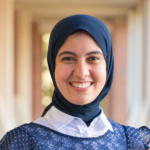
Dalia Fleifel, Ph.D., focuses her research on understanding how the c-MYC oncoprotein drives rapid cellular proliferation. She combines genomic approaches with single-cell flow cytometry to dissect how MYC reprograms cell cycle dynamics. Since c-MYC is an undruggable protein that is frequently overexpressed in highly proliferative cancers, uncovering its mechanisms of action is key to identifying new therapeutic vulnerabilities.
Dalia Fleifel, Ph.D.
Postdoctoral Researcher in the Cook Lab

Martha Johnson, Ph.D. studies the molecular dynamics and regulation of the cell cycle. She develops assays and biosensors to track how cells enter and exit the cycle, with a focus on identifying the molecular markers that influence a cell’s decision to proliferate or arrest. Her work is driven by the vision that these biosensors will one day help uncover more precise biomarkers, paving the way for improved drug therapies and therapeutic options across a wide range of diseases
Martha Johnson, Ph.D., Postdoctoral Researcher in the Cook Lab

Cansu Kose, M.D., Ph.D., studies how DNA damage forms in the genome and how cells repair this damage to maintain genetic stability. She is passionate about uncovering the molecular mechanisms that safeguard our DNA, because understanding these processes helps explain how cancer and other diseases develop and may one day guide new therapeutic strategies.
Cansu Kose, M.D., Ph.D.
Postdoctoral Researcher in the Sancar Lab

Steven J. Moran, Ph.D., investigates the spread of RNA viruses through TAM receptor tyrosine kinases. This exciting research gives him the opportunity to continue studying pathogenic RNA viruses using biochemical and biophysical approaches.
Steven J. Moran, Ph.D.
Postdoctoral Researcher in the Starbird Lab

Keshav Patel, Ph.D., develops mechanistic mathematical models of blood biophysics to understand vascular occlusion in Sickle Cell Disease and to inform potential therapies. He is most excited by the collaborative nature of blood research and leverages his mathematical expertise to understand and treat human diseases.
Keshav Patel, Ph.D.
Postdoctoral Researcher in the Leiderman lab

Rebecca Stowe, Ph.D., studies lipase structure and function with the goal of discovering lipase activators to treat high triglycerides and understanding how these activators affect lipase structure.
Rebecca Stowe, Ph.D.
Postdoctoral Researcher in the Neher lab

Shawn Yu, Ph.D., is a translationally oriented physician scientist, medical oncologist, and American Cancer Society Postdoctoral Fellow co-mentored by Dr. Brian Kuhlman and Dr. William Kim. He uses computational protein design to develop novel cancer immunotherapies. He identifies Brian’s seminal work on Top7 as an early inspiration for pursuing this field.
Shawn Yu, M.D., Ph.D.
Postdoctoral Researcher in the Kim and Kuhlman labs

Ajit Prakash, PhD, a member of the Sharon Campbell Lab, recently published groundbreaking research in Nature Communications titled “Molecular and functional profiling of Gαi as an intracellular pH sensor.” This work advances our understanding of intracellular signaling and pH sensing mechanisms.
In recognition of his contributions to the scientific community, Dr. Prakash has also joined the editorial boards of Scientific Reports and PLOS One, where he will help shape the future of peer-reviewed research.
Ajit Prakash, Ph.D., Postdoctoral Researcher in the Campbell Lab

Surbhi Mundra, PhD, a biochemist and biophysicist in the Campbell Lab, is driven by the profound impact of microscopic changes that lead to major physiological consequences. Her current research investigates the mechanistic role of oxidative stress in lung cancer, with a focus on the growing challenge of drug resistance.
In addition to uncovering disease mechanisms, Dr. Mundra contributes to novel drug discovery efforts, aiming to advance therapeutic strategies in cancer treatment.
Surbhi Mundra, Ph.D., Postdoctoral Researcher in the Campbell Lab