T32 Molecular and Cellular Biophysics Training Grant was renewed this year. This grant is renewed every 5 years.
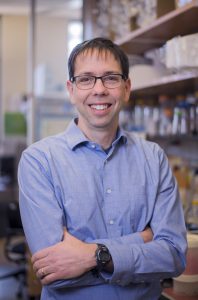
PI: Dr. Brian Kuhlman.
Special thanks to Holly Shepherd for all her work on the grant application. Please contact Holly Shepherd for details.
UNC Biophysics website: Molecular and Cellular Biophysics Program
—
GUIDE TO SPECIAL MASTER’S PROGRAM for Department of Biochemistry and Biophysics
University of North Carolina at Chapel Hill
The Special Master’s Program for employees in the Department of Biochemistry and Biophysics enables laboratory employees to pursue a Master’s degree on a part- time basis while working full-time in the Department. The faculty member in whose laboratory the employee works will normally be their research advisor, and must agree to the employee’s participation in the program. The Special Master’s program is designed to help research technicians increase their level of participation in and contribution to the scientific activities of their current laboratories. The M.S. degree also provides an important credential for employees who wish to become competitive for higher level technical positions or to move into new career directions. The M.S. degree earned by students in the Special Master’s program is a terminal degree, and it is important for prospective students in the program to understand that participation in this program is not an entrée into the Ph.D. program of the Department. Successful completion of the M.S. degree in this program requires a considerable commitment of time and energy over the forty hours per week expected of a laboratory technician. Time spent in class, attending seminars, and studying for and taking examinations is over and above the forty hours per week that is owed to the advisor/employer as a technician. When a student starts working on the thesis project, a portion of the research may be done during the regular work week if the advisor/employer agrees to that arrangement. However, whenever a student is registered for “Research in Biochemistry (BIOC 902),” the student is expected to spend additional time in the lab working on the thesis project, beyond the regular work week. While much of the required coursework can be taken under the tuition waiver program for full-time employees of the University, it is not possible to complete the M.S. degree in a timely manner without paying any tuition. During semesters when a student takes two courses or takes a formal course plus research credits, the student will receive a tuition waiver for one of the courses and will have to pay tuition for the other one. Most students end up paying tuition for two courses, at the in-state tuition level, in order to complete their degree requirements. Most students take around three years to complete the requirements for the M.S. degree under the auspices of this program. While it is technically possible to complete the degree in as little as four semesters of part-time study, such a timetable requires an extraordinary commitment of time and effort to the program.