13 years ago
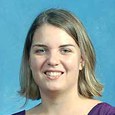
Grad Student Rachel Redler receives her PhD!
Rachel successfully defended her dissertation and received her PhD on December 6, 2013.
13 years ago
Rachel successfully defended her dissertation and received her PhD on December 6, 2013.
13 years ago
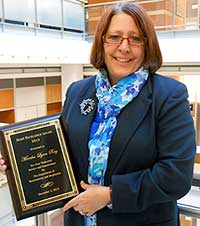
The Staff Recognition Program was established in 2013 to annually recognize a staff member for their outstanding achievement and service in the department. Nominations are made with the following criteria in mind: teamwork, creativity and innovation, positive attitude, enthusiasm, productivity, flexibility and leadership. Congratulations to Lynn Ray as the inaugural honoree!
13 years ago
In keeping with last year's ranking, the Department continues to rank fourth among all Biochemistry departments in the US.
13 years ago
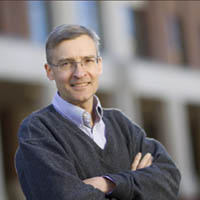
Learn more about Henrik Dohlman, professor and vice chair of biochemistry and biophysics, from his profile highlight in ASBMB Today's December 2013 issue.

13 years ago
Learn more about the event "Translating the Biophysics of Molecular Switches: Signaling Mechanisms and Inhibition of Ras and Rho GTPases"
13 years ago
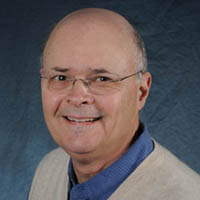
Dr. Charles Carter, Jr., Professor of Biochemistry and Biophysics resurrect “molecular fossils” to conduct experiments that undercut the predominant scientific theory of how life began on Earth.
13 years ago
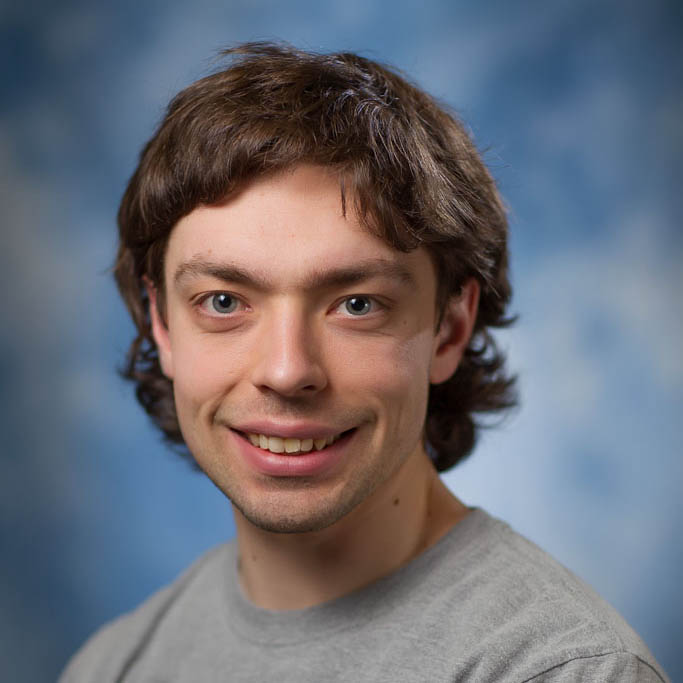
Congratulations to Peter Thompson, Harsha Gunawarden, Seth Zimmerman, Tim Jacobs and Marino Convertino.

13 years ago
Congratulations to Greg Wang, Assistant Professor of Biochemistry and Biophysics, who was awarded a Jefferson Pilot Fellowship from UNC School of Medicine to further his research mission searching for better ways to shut down cancer cells.
13 years ago
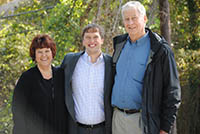
Aaron successfully defended his thesis and received his PhD on October 25, 2013.
13 years ago
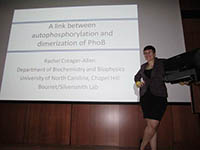
Rachel successfully defended her thesis and received her PhD on October 1, 2013.
13 years ago
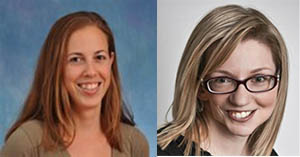
Karen Plevock and Cassandra Hayne are the new Biochemistry and Biophysics student representatives for the term 2013-2014.
13 years ago
The team from the University of North Carolina at Chapel Hill found that a single atom—a calcium, in fact—can control how bacteria walk.