As we age, everyone has so-called “senior moments” from time to time. For example, we walk into a room, and we can’t remember why we came; we forget where we laid our keys; we forget someone’s name.
When this happens, we often ask ourselves, “Is this normal aging?
Each of these situations can be concerning but are often found to be a normal part of aging.
As we get older, parts of the brain do shrink, and the communication between one part of the brain and another slows. Blood flow to the brain may decrease. Inflammation in the brain may increase. Each of these changes can affect our mental functions even as healthy adults.
We can do this through changes in our lifestyle; changes involving what we eat and what we do.
For example, you can begin a regular exercise regimen such as walking regularly. Studies have shown that exercise of some kind 150 minutes per week has a protective effect on our brains.
You can make some changes to your diet to include more fresh fruits and vegetables. The Mediterranean diet and the MIND diet are two diets which have shown evidence of improving or slowing cognitive decline.
You can increase activities with others to decrease social isolation. If you are mostly alone, take steps to be more engaged with others. For example, join a group at your local senior center, church, or community organization. Engaging in conversation is good for our brain health.
Sleep is a very important part of brain health. It may be that with a few changes, you can ensure a good night’s sleep of at least 6-7 hours. Talk with your doctor if you are not sleeping well.
Hearing is another important part of brain health. If you have a hearing problem, be sure to see a specialist to determine if you need to be fitted for a hearing aid.
Another area which can affect your brain health is your blood pressure. Be sure to check your blood pressure regularly and take medications if directed to decrease high blood pressure.
Being intentional about addressing these issues will help to promote your brain health.
The National Institute of Aging website provides good information on normal aging and what you can do to maintain good brain health. For example, it states that you should consider both environmental and lifestyle factors that you can change or managed to help reduce your risk. They list the following factors:
Some physical and mental health problems, such as high blood pressure or depression
It’s common to worry about dementia when memory problems begin. But not all memory loss is caused by Alzheimer’s or related conditions. In fact, there are many treatable reasons why someone might experience changes in memory or thinking, such as:
Medication side effects
Hormonal imbalances
Vitamin or electrolyte deficiencies
Small strokes (also called “mini-strokes” or TIAs)
Delirium (sudden confusion, often due to illness or medication)
Poor nutrition or dehydration
Anemia (low red blood cell count)
Stress or anxiety
Depression
Infections
Alcohol use
If you or someone you care about is having trouble with memory, problem-solving, or staying organized, it’s important to talk with your doctor. A thorough evaluation can help identify the cause—and in many cases, there are steps you can take to feel better and stay sharp.
When It’s Worth Getting Evaluated
Many people ask, “So, when do I need to be concerned about my memory?”
Memory loss that impacts your daily life is concerning and signals that you should be evaluated for a cognitive problem. For example, if you have trouble paying the bills; if you forget to do them, or if you are unable to organize and plan to get them done. These are just a few examples of behaviors which indicate you need to talk with your doctor.
The CDC offers the following list to help you determine when you should be evaluated.
Forgetting events, repeating yourself, or relying on more aids to help you remember (like sticky notes or reminders).
Having trouble paying bills or cooking recipes you have used for years.
Having problems with cooking, driving places, using a cell phone, or shopping.
Having trouble understanding an event that is happening later, or losing track of dates.
Having more difficulty with balance or judging distance, tripping over things at home, or spilling or dropping things more often.
Many people who begin having cognitive problems that impact daily activities will delay sharing this information with their health care provider. For example, someone may keep forgetting to pay their bills on time or they may pay them twice. If these types of issues occur frequently, we recommend a visit to see a specialist, such as a neurologist, who can fully assess and diagnose cognitive issues such as dementia. By identifying dementia early, you may be able to take steps to slow its effects.
There are many factors that impact cognition. Some of these factors are “modifiable” meaning they can be improved and potentially slow the progression of cognitive decline. It is important to identify these factors which may include conditions such as depression, sleep disorders or hypertension.
Early diagnosis of dementia enables you to be proactive in caring for yourself. Knowing what is wrong will allow you to focus your attention on measures you can take now while you enjoy time with the people and things you care about.
Sharing your diagnosis with family and friends will encourage conversations about your needs and desires over time. Talking with those you trust and planning for your future will allow you to make the best decisions about how to live your life now.
Mild Cognitive Impairment
Mild cognitive impairment (MCI) is when you are growing older and developing memory problems greater than what is expected for your age, but you are not experiencing personality changes or other problems that are characteristic of Alzheimer’s disease. Researchers cannot yet definitively say that people with MCI will or will not go on to develop Alzheimer’s disease, or if its progress can be prevented or delayed. Studies have shown that if you are experiencing MCI and also having trouble moving your legs and feet, you may be twice as likely to later develop Alzheimer’s disease.
Dementia
Dementia is a disorder of the brain that results in declined cognitive performance, causing individuals to lose the ability to think, process, judge, and appropriately respond to information. Dementia is a broad term, covering many different diseases of the brain. Some of the more well-known kinds of dementia include Alzheimer’s disease, Lewy body dementia, vascular dementias, and frontotemporal dementias.
There are very early signs and symptoms of dementia, mild cognitive impairment, mild dementia, moderate dementia, and severe dementia. Biomarkers are indicators, such as changes in sensory abilities, or substances that appear in body fluids like blood, cerebrospinal fluid, or urine. Biomarkers can indicate exposure to a substance, the presence of a disease, or the progression of a disease over time. Such tools are critical to helping scientists detect and understand the very early signs and symptoms of dementia.
We still aren’t entirely sure what causes dementia, but we are learning more and more every day. Great strides have been made in the last twenty years alone, and we have more information now than ever before to give us clues about where these diseases come from and how to treat them.
We have learned that there are genes we inherit that may influence our susceptibility to dementia. However, having this gene does not necessarily mean that you will develop dementia, and not having the gene doesn’t mean that you won’t develop dementia anyway. We also believe that dementia is a chronic illness that develops over time, and reacts with other medical conditions and everyday exposures.
Unfortunately, there is not yet a cure for dementia. However, there are many FDA-approved medications that help treat the symptoms of the disease, and can help slow down your memory problems as well as treat other potential risk factors such as heart disease. Although no two cases are alike, there several medications on the market that have helped many individuals slow down their condition.
In the U.S., there are believed to be at least 5 million individuals with age-related dementias. These numbers will only continue to rise with the aging of the U.S. population. It is estimated that 1 in 6 women, and 1 in 10 men, who live past the age of 55 will develop dementia in their lifetime. Dementia caused by nervous system disease, especially Alzheimer’s disease, is increasing in frequency more than most other types of dementia.
Dementia is considered a late-life disease because it tends to develop mostly in elderly people. About 5% to 8% of all people over the age of 65 have some form of dementia, and this number doubles every five years above that age. It is estimated that as many as half of people in their eighties suffer from dementia.
Dementia due to:
Long-term substance abuse
Tumors that can be removed
Subdural hematoma, accumulation of blood beneath the outer covering of the brain as a result of a broken blood vessel, usually caused by head injury
Hypothyroidism, a condition that results from an underactive thyroid
Hypoglycemia, a condition that results from low blood sugar
Types of Dementia
Alzheimer’s disease is a type of dementia that causes problems with your memory, thinking, logical reasoning, and behavior. It is the most common form of dementia, with as many as 5.7 million Americans living with Alzheimer’s today.
Alzheimer’s disease is a progressive disorder that attack’s the brain’s nerve cells (neurons), and results in memory loss, behavioral changes, and loss of thinking and language skills. The neurons in your brain are all interconnected, and they fire every few seconds to give off a charge which keeps your brain active. In Alzheimer’s disease, these neurons get tangled up and clogged with sticky protein plaques to the point that they can no longer fire a charge. When a neuron cannot function properly, it dies out. As more and more neurons die out, those areas of the brain wear down resulting in lost memory and functioning. This is typically a very slow process, one that takes years for the condition to fully develop.
Lewy body dementia is a condition that closely resembles two other conditions, Alzheimer’s disease and Parkinson’s disease. Because of its similarity to these other more common diseases, Lewy body dementia oftentimes goes undiagnosed by medical providers who may be unfamiliar with the condition. Lewy body dementia is also difficult to diagnose because the symptoms present themselves differently in each person. In order to receive a clear diagnosis, individuals should be seen by medical professionals who specialize in the diagnosis and treatment of dementias.
Lewy Body Dementia Association Research Center of Excellence
UNC Neurology has been named a LBDA Research Center of Excellence (RCOE) by the Lewy Body Dementia Association (LBDA), the leading advocacy group dedicated to raising awareness and advancing research about Lewy body dementia (LBD). Coordinated by Mayo Clinic, this collaboration features 25 preeminent academic medical research centers across the United States.
The LBDA RCOE program provides a centralized, coordinated research resource, supporting an expanded effort in conducting clinical trials related to LBD while helping to provide expert clinical care for patients, families and caregivers.
Resources
Lewy body dementia community education and support facilitator, Pat Snyder, has created a YouTube channel with short, informative videos on a variety of topics for caregivers of patients with Lewy body dementia.
Frontotemporal dementia, also known as Pick’s disease, is a rare form of dementia that is very similar to Alzheimer’s disease except that it only affects certain areas of the brain. Individuals with frontotemporal dementia have an abnormally high amount of a protein called “tau” in the brain. This protein is found in all nerve cells, but scientists are still searching for the cause of the abnormal quantities that develop in some individuals. Frontotemporal dementia is very rare and usually affects individuals between ages 40 to 60.
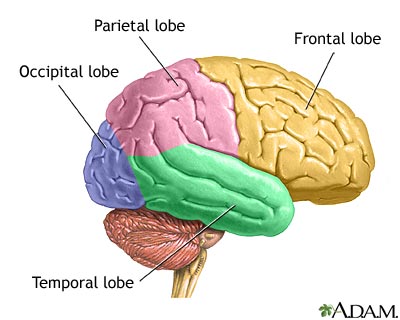
This is a progressive disease that slowly worsens over time. The disease gets its name because the tau protein only affects the frontal lobes and temporal lobes of the brain.
Individuals with frontotemporal dementia struggle with higher level reasoning, expressive language, speech perception and memory formation as these areas of the brain begin to shrink over time.
Vascular dementia is a broad term describing problems with reasoning, judgment and memory that is caused by impaired blood flow to the brain. For example, you can develop vascular dementia after a stroke blocks an artery in your brain, or when other condition damage your blood vessels and reduce circulation. Factors that increase your risk of heart disease and stroke such as high blood pressure and high cholesterol also increase your risk of developing vascular dementia.
 UNC Neurology has been named a LBDA Research Center of Excellence (RCOE) by the Lewy Body Dementia Association (LBDA), the leading advocacy group dedicated to raising awareness and advancing research about Lewy body dementia (LBD). Coordinated by Mayo Clinic, this collaboration features 25 preeminent academic medical research centers across the United States.